Blog Archives
M is for Misogyny – Part II
This post is part of the ongoing Alphabet Series. Listen along to my recording on YouTube and/or read the article below ♥♀
Did you come back for more? Well, colour me impressed. This is dangerous shit I’m talking about here. Asking people to do a little self-analysis usually requires a bit of a cognitive walk on the wild side and can inspire a lot defensive anger in anyone whose personal operating system consists of the fragile schema demanded by patriarchy. This can include men, straight women, religious people, mothers, liberal feminists, and even some activists and self-proclaimed radical feminists. Anyhow, congratulations on coming back. I’m hoping that the crescendo built by asking the why-questions in the last post will find its way into some more concrete and problem-solving thinking or action-taking in this post addressing some how-questions. So let’s get started.
M is for Misogyny – Part II.
In the last post, I attempted to explain why the average woman hates herself, and by extension, other women. I suggested that early childhood programming to see females as the enemy and as less valuable by misogynistic societies and families; the development of an addiction to suffering; and the harming of other women as a proxy for self-harm and as safer targets for revenge than male oppressors played major roles in women’s interactions. In addition, for women claiming to live feminist lives, I suggested that their own acts of aggression and feelings of hate or dislike towards other women may stem from the blind spot that experience and awareness create, and the lack of agreement about what feminism is – in addition to the other reasons above. For the more self-aware feminists, realizing that one has seemingly misogynistic thoughts and feelings about some women can inspire feelings of angst, guilt and shame – or what we call cognitive dissonance. Then can come the why-questions – the ones that help with understanding one’s purpose, and the motivation and the mechanisms behind one’s own and others’ behaviour towards other women. And if, by this point, the woman in question hasn’t just ended up abandoning feminism altogether in order to make her feelings and actions match again, she starts asking the how-questions. How is about taking action or starting on a path. It’s about turning purpose into tangible goals and measureable outcomes.
So, I’m going to give this post a secondary title in the form of an important how-question:
How can I support women without becoming a doormat, a punching bag or a martyr?
This is a common point of frustration for women trying to figure out how to deal with patriarchy. And I think a lot of women start to get burned out after years of trying to help people who don’t necessarily want or feel grateful for female help. You may already have your own answers to this question and the others that I’ll include below. I’m going to talk about my own solution and how I have dealt with my own feelings towards the multitudes of women who make me angry and frustrated. Please remember that there is no single way to ‘do feminism’, and although many people will try, no one should be telling you whom to help, how to help, or whether you should even bother helping at all. Like I said in Part I, purpose is personal, and I’ll extend that by saying that how you pursue your purpose is also personal. Sometimes, those who think they are helping women and are shaming you for behaving differently are actually doing more to maintain patriarchy than they realize.
Here are a few other how-questions that may come up:
How can I call myself a feminist if I am selective about which women I help and feel little interest in knowing or even being around most women?
How do I know if so-called feminist activities are actually anti-woman?
How can I criticize anti-woman female behaviour in an objective way that doesn’t end up spiralling into misogyny?
How do I identify a definition of feminism that actually helps women when so much of what is out there just seems to be pro-male rhetoric designed to gain followers and male approval?
Yeah, tough questions, but the following guiding principles keep me grounded. I’ve thought a lot about where I fit in the feminist movement, and I’ve determined that these principles are the best way to women directly and indirectly.
Gynocentrism vs Feminism
If you ask around, or better yet, if you listen to what women say and then watch what they do, you will come to the conclusion that feminism is whatever the fuck you want it to be from moment to moment and place to place. I’m not exaggerating or joking. The label has lost most of its original meaning. This is confusing to people encountering feminism for the first time or looking for answers to why and how questions as they pertain to helping women. A lot of this so-called helping of women is actually helping men and hurting women (or specific groups of women)
If you actually give a shit about women, a good rule of thumb or place to start is this: Ask for or look at the mission statement. If a feminist or feminist web site gives you more than one sentence and if that sentence includes anything besides or instead of the liberation of females from male oppression, then you are not dealing with woman-centred feminism. There shouldn’t be vague or euphemistic language. There shouldn’t be a focus on anything other than female liberation. Feminism is not about fighting all the phobias and isms in the world, nor is it about the environment or animal rights. All of those have their own movements, and believe me, animal rights or any other activists are not including blurbs about liberating women from men in their mission statements. So why must feminism do this? It’s like trying to order high-quality food off a 12-page menu with 300 main dishes.
Of course, everyone has the right to abuse language and to change accepted definitions to suit political agendas. It’s a human right, right? So, while I use the word feminism, or even radical feminism, I actually no longer consider myself to be either of those things. They’ve become practically meaningless, and in many cases, just another word for androcentrism. If you’ve been following along on my site, you already know that I consider myself to be a gynocentrist and a female separatist. And I highly recommend reading or listening to my post G is for Gynocentrism to get the deets on that.
Gynocentrism is clear and simple in its principles or mission, and I think is it possibly what radical feminism was supposed to be before it began to over-focus on inclusivity and all the other side issues. Simplicity is how you stay focused and united in a cause. It is easy for people to know right away whether they agree with it enough to join. When you sign up for any of the feminisms, you can pretty much guarantee that there will be in-fighting, hierarchies, schisms, a focus on men, and the kicking-out of members who get too offensive or speak too much truth. These days, you can’t just be a woman in feminism. You have to bring all your other baggage filled to the brim with your wardrobe of identities.
The bottom line: give a group, individual feminist, book, or other material the old Occam’s Razor test. If you can’t see a clear focus on female liberation from males and from female self-harm behaviours, then turn around and walk away. Or maybe run.
Self-Preservation vs Self-Immolation
A lot of feminist activists tell us that we have to love all women even if they are the worst kind of patriarchy-supporting people, and that the sympathy and empathy must flow unconditionally. Kind of a love the sinner, hate the sin kind of thing. And I say stop. Feminism ain’t no religion, and I am no longer willing to be abusive women’s doormat, punching bag or token sacrifice. I do have a limited amount of empathy and sympathy for women who have suffered, and I don’t believe women and girls deserve what happens to them because of men. I’ve said before that I don’t believe suffering is a necessary part of the human condition. But I do hold women responsible for their decisions and behaviour, especially once they are old enough to be in charge of children’s well-being and to use their brains to regulate their own behaviour. Having a bad life is never an excuse for abusing other women or girls. I’ve been put into some very bad situations by women I was trying to help, and I finally came to realize that I was wasting my time, and my efforts weren’t helping women as a class at all. On the contrary. I was, in fact helping men by depleting my energy, by putting myself in danger, and by enabling and empowering woman-hating women. I realized that I, myself, as a woman didn’t deserve to be destroyed or abused by men or women acting on behalf of men.
The take-home message here is that like in an emergency situation on an airplane, you put your own oxygen mask on first. It is both perfectly fine and perfectly logical to put yourself first before you attempt any heroics. I think any of us women over the age of 40 can tell you what happens to your body and mind after decades of putting others, especially antagonistic, parasitical, or stress-inducing others, first.
Strategic Help vs Patch-Up/Clean-Up
Given that there are limited resources for women in this world, and that an individual woman only has a limited amount of gynergy to fuel herself and whatever other people she helps, it makes sense to be strategic. I used to be indiscriminate, running from fire to fire before I realized that it was both unsustainable and pointless.
Feminist attention and efforts seem very much focused on the women who already get most of the limited resources and attention available – mostly mothers and partnered straight women – and the fact that it never seems to be enough and seldom, if ever, solves any of the problems these women face, let alone women as a class face, should really be telling us something. It’s not working! We’re focused on the wrong things! We’re pouring our money and energy into a bottomless pit of neverending suffering.
The goal of activism, although no one would ever admit this, is to patch up wounded women and clean up the most recent messes that men make of women’s lives, and then send the women back into the world to do it all again. I see activism as sort of the ER of the healthcare system. The bulk of the work is reactive, not preventative. I’m sure there is the occasional small and underfunded feminist activist group that seeks to do preventative work, but it is not the norm. Prevention is sooo much harder and more long-term than putting on band aids and offering crisis counselling. Am I advocating for stopping all of this? Well, no, of course not. Short-term after-care is always needed. But I can’t personally participate in this because I see it as ultimately helping men and maintaining patriarchy, although I know activist women rationalize their contributions differently.
Myself, I help individually, spontaneously and strategically. I help women who both want and need help and who are on a gynocentric path, and whose needs won’t be addressed by The System or by feminist activists. By helping them, I believe my contributions make an actual preventative difference and ultimately help all women by empowering those women who don’t uplift patriarchy. That is the only action that makes sense to me. And it is these women who are more likely to pay it forward, which is how feminism should work, but seldom does.
Integrity vs Inclusion
I don’t think the majority of women can handle gynocentrism, or even weak forms of feminism. I’ve heard a lot of women in the scene say that feminism is for all women – it is inclusive. And I’ve never really understood that because no other movement welcomes people who don’t agree with the basic principles or who behave in ways that completely undermine what the group is trying to do.
One of the biggest problems is the inclusion of men in pretty much all feminisms, including radical feminism. Most feminists are partnered heteros, and many are mothers of sons. How can you see and accept basic truths about an oppressor class when you are willingly fucking one or more of them and acting as a servant to at least one of them in multiple ways? In any other movement, this would not be a question inspiring the kind of rage that women direct at people like me for simply asking them to self-analyze. Heck, this type of question probably wouldn’t even come up. Imagine someone asking the following: How can you eat a steak every night and work in an abattoir an call yourself a vegan activist? Well, imagine defining veganism as “whatever the fuck you want it to be”, and I guess these behaviours would be totally cool and the question would come off as irrational.
So like I said, there is no confusion about whether you are walking the talk if you adopt a clear and simple set of principles like in gynocentrism and female separatism.
Putting It All Together
I’m not going to give explicit answers to the how-questions listed above, but I’ll tell you what works for me in approaching these types of issues.
First, keep it simple. Simple definitions, simple principles, simple reasons. If you encounter things that include too much, involve complicated or vague or euphemistic language, or seem to involve reasoning that doesn’t jibe with what you are seeing happen, there is probably something wrong.
Second, anti-woman activities and behaviours are always more popular and approved of than pro-woman stuff. A case in point: my most watched video in the Alphabet Series has received 259 views. Make-up tutorials get millions and millions. Guess which videos are pro-male/pro-patriarchy?
Third, pro-male patriarchal women as well as pro-male feminist women do harm to women as a class by diverting time, money, energy and resources to men. Gynocentric and female separatist behaviour helps women as a class. Even if you are very selective in whom you help or associate with, your assistance ultimately helps women as a class. Never let any feminist or activist make you feel like you are biased or mean. You may actually be helping women more than they do, and besides, at the end of the day, your energy and resources are yours to allocate according to your principles.
Finally, you absolutely can be critical of anti-woman female behaviour without devolving into misogyny. You can also feel angry and disappointed with women who betray and harm other women, including you. Channel the rage into man-hate – they are the main reason these women are so damaged. Support your critiques, if you choose to voice them, with evidence and logical arguments. And don’t launch ad feminem attacks by calling women stupid, even if their behaviour may indeed be stupid. If you can, find other women you can talk to about your specific experiences. Most of the time, you’ll end up realizing that what you’re feeling isn’t true hate, but frustration. But frustration can fester without a healthy outlet and chance to speak freely without judgment. And that is why men put so much effort into isolating women and policing them when they manage to congregate. You see, they depend on keeping us feeling like we hate each other.
♀️ If you care to support Story Ending Never, we are appreciative. ⚢
M is for Mayhem
This post is part of the ongoing Alphabet Series. Listen along to my recording on YouTube and/or read the article below ♥♀
About a thousand years ago, when I was 29, I was living and working as an itinerant orchard worker in New Zealand. At one point, I found myself staying at a youth hostel in one of their fair cities – maybe Christchurch – and as is habitual with the 20-something nomad denizen, a group of us went out to a local watering hole. I don’t actually remember what we were talking about during that outing, but apparently I said something that warranted a comment from one of the males in the group. And the comment, which I do remember clearly, was designed to be a compliment. He said: “Wow, you’re an anarchist, aren’t you?”
I think I gave some sort of non-committal answer like, “I guess” because I really didn’t know what exactly it meant to be an anarchist other than the general stereotype that the majority of people believe: no leadership, no rules, random and unproductive violence, and total chaos. With the exception of a few minor violent acts of self-defense in response to assaults by males in my teen years, I didn’t consider myself to be a violent person, and I certainly didn’t see myself as an eco-terrorist or a violent Black Panther type. So what did it mean that I was an anarchist? As is likely no surprise to anyone, the public education system then and still today didn’t address the nuts and bolts of anarchy or feminism or why people seemed to deem movements like these necessary. You see, capitalism and female slavery are cornerstones of our world. We are not allowed to think critically about them, and we definitely don’t want children to escape indoctrination into willingly participating in these crucial foundational systems through exposure to anecdotal evidence, quantitative data, and philosophical discussion, do we? So anyhow, there I was in 2001, a highly educated and fairly well-read, yet still selectively ignorant, young woman who still hadn’t been exposed to some of the most important written work ever produced because of lack of exposure, access, and role models.
You’ve likely noted that I included anarchy and feminism in the same ideological boat, and some feminists have seen and still see a place for themselves in both movements. But today, I’m actually going to argue that as they have been and are still practised, neither actually does much for women either separately or together. I’ll then talk about what true anarchism might look like from an actual feminist, or more specifically, a gynocentric perspective.
So let’s dive into why M is for Mayhem.
What is anarchy? Well, long before it was established as a political philosophy in the mid-19th century, the term was, in fact, used to mean disorder and mayhem. The word gradually became linked with revolutionary acts in various places, and bubbled up among disaffected male ‘thinkers’ from all walks of life with too much time on their hands and comparatively little to complain about. To a man, they saw an inverse relationship between what they felt they deserved and what they believed they should be accountable for. They were also expert wordsmiths, twisting language to create a framework for a political environment they could abuse for self-interest, while appearing on the surface to champion freedom and equality and rationality. This shouldn’t be a surprise. If you look at any and all political ideologies that males have come up with throughout history, regardless of ‘wing’ status, they all purport to champion the same things. Freedom, equality, opportunity, security, and responsibility. But at the end of the day, these ideals are never meant to be accessible to all – and by all, I mean women. And this is simply because all males operate and thrive on dominance, control, entitlement and self-interest, whether they acknowledge it or not.
I’ll just mention a few of the basic tenets of anarchist thinking, in general. If you want to do a deep dive into anarchist thought, I recommend heading over to either The Anarchist Library or Dead Anarchists; both are dot org websites. Important to note is that over time several branches of anarchist thought have emerged, some more individualistic and some more collectivistic. What they tend to agree on, however, is that the State and state-sanctioned capitalism were and are the major sources of systemic violence, coercion, and exploitation, and strip men of the rights and freedoms they believe they deserve. Key to their vision of society included:
1.. Stateless and ruler-less self-organization. Anarchist males ignorantly and arrogantly believed that they could come together in a voluntary fashion, behave in a civilized and self-monitoring way, and engage in mutually beneficial arrangements without the intervention of a policing authority. In other words, anarchists wanted order and rules without rulers. It’s laughable to imagine males magically constructing a functional society based on cooperation and peace and somehow managing not to engage in the reactive and violent emotionality that is the hallmark of every male dominated society since time began. I just don’t think males are capable of this.
2.. Anti-capitalism. Anarchists rightly understood that capitalism is a source of exploitation and violence and that wealth determines policy. But they failed to understand that capitalism isn’t the root of the problem, and that removing capitalism doesn’t solve the problems of violence and exploitation. The root problem is males themselves. Every system they design becomes coercive and exploitative and hierarchical. It’s just which males are on top that changes when systems change.
Interestingly, many of these early anarchists profited immensely from wealthy benefactors and exploitative free or indentured female labour, including the father of anarchy, himself. I so often find that males who spend their lives philosophizing about, criticizing and rebelling against the system are usually the worst hypocrites, seldom practising what they preach. It is sometimes hard for me to understand why these men attract so many female acolytes; it is quite possible that most of these men are charismatic psychopaths able to manipulate politically or ideologically impassioned as well as socially and intellectually isolated women.
3.. Free speech. A lot of these anarchists opposed the control of the church and the censorship of the State. Men generally believe they should be able to say whatever they want, whenever they want without consequences. But they don’t tend to extend this form of freedom to women, especially those wanting freedom from male control or proposing methods of female self-governance or suggesting that consent isn’t possible for women due to an imbalance of power. This is as true now as it was then. Again, this demonstrates the hypocrisy of male philosophers and human rights proponents. Their underlying belief is always: “I oppose dictatorship, unless I am the dictator.”
4.. A non-coercive society. Everything about an anarchist society is supposed to be non-coercive or voluntary. For example, an anarchist would choose to pay taxes because they want to since they are using a service, not because they are forced to.
One of the problems inherent in a society without religion, capitalism, police, government or hierarchy, though, is how to get around the whole rape privilege thing and still have free access to pussy under the pretext of female free will and consent. Men realized that their right to rape was built into all of those systems they were fighting to abolish, and under anarchy, women might start to argue that they have the right to freely choose their participation, as well. No truly free woman would ever consent to what men do to women’s bodies, and all men know this on some level. And this is where the ‘free love’ movement came in.
Free love was a big part of the anarchist movement, especially among the women who joined the fray, and we saw this as an undercurrent in Second Wave Feminism and still today in the Slut Movement. It would actually have been more in line with true anarchism to refrain from engaging sexually with men altogether as the power imbalance is inescapable. But women fell for the male logic behind the movement – I think they would not have been allowed to participate otherwise. The male logic fail goes something like this. The only difference between intercourse and rape is this thing called ‘consent’. But consent is only possible between two equal parties. Women have never been equal, and cannot be equal in a world where men exist because men always hold the threat of rape over women even when the word love or equality comes out of their mouths. The exception to equality is payment. Compensating someone can be considered to be consent, so you can’t rape a prostitute or a wife since both are paid for fuck services. So how can you convince a woman to consent to rape without pay? Well, you tell her that fucking as many men as possible without compensation is the ultimate proof of female free will, bodily liberation and equality. And this constitutes the ultimate flipping off of religion, capitalism and the State.
This fooled and continues to fool a lot of anarchist and feminist women, unfortunately. But the reality was and is still that no version of free love has ever liberated women. Anarchist women were still servicing men, still getting pregnant, still dying from botched abortions and difficult pregnancies, and contracting even more venereal diseases than before, but now men didn’t have to pay for anything, they had more access to women’s bodies, and they never had to face rape charges because those existing in a state of perpetual willingness can’t be raped.
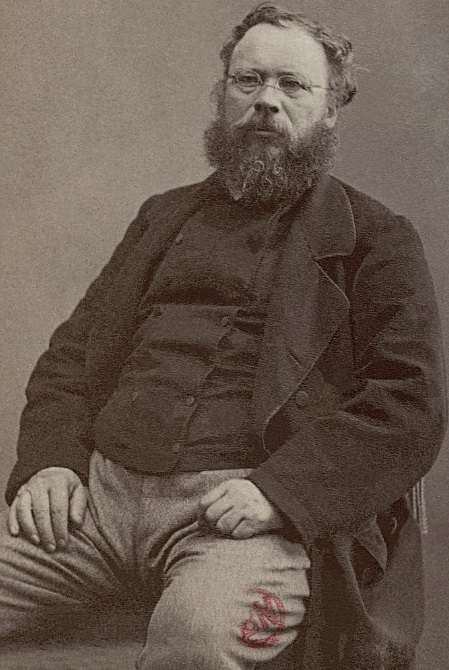
5.. Non-violence. Contrary to what most people believe, the majority of anarchists don’t support violent agendas. But this needs to be clarified, and I’ll use the Father of Anarchy, Pierre-Joseph Proudhon, to illustrate. Proudhon, who only got a good start in life because of a devoted boy-mom and the generosity of capitalists, believed in a moral and ethical peaceful transformation of society. He criticized revolutionary violence. But he did not extend his beliefs to women. So much for equality… He wrote in his private notebooks, which have since been published, that violence should be used to subdue women, and he firmly believed that “Woman does not at all hate being used with violence, indeed even being violated…” While men tell us what they think all the time, what women see but refuse to believe is only the tip of the iceberg. We see this all the time when men’s private activities come to light posthumously or even accidentally while they are alive. The best policy, in my experience and opinion, is never to give men the benefit of the doubt – or ‘yes, all men’ – and to always question their publicly stated beliefs. I think that you’ll eventually discover that their words, actions and beliefs don’t match up. They tell you flimsy lies to get your labour, support, ideas and body. Supporting them is always a mistake.
A Word on Female Anarchists
For every male philosophy and movement, there have always been female supporters. They are always fewer in number than the males, simply because radical thinking is always more dangerous or risky for women. Because of their minority status, these women tend to be very pro-male and male apologists, even if they think they are arguing on behalf of women’s rights. They have to. The limited attention and support they do get never comes from other women as they are too afraid to rock the patriarchal boat. But the male supporters end up also being their abusers. This is the history of revolution, and I touch on this in my F is for Friendship post. Men get a radical idea and garner female support by mouthing words that women misinterpret to mean shared ideals. Women then devote endless hours of labour, emotional support, money, and sexual access to their bodies to the radical male movement, and then end up in jail, and/or financially destitute, and/or sexually violated, and sometimes in the end, disillusioned when they discover that the movement was aimed at male rights and freedoms, not human rights.
The anarchist movement was no different. Some truly amazing and brave women devoted their lives to male freedom from exploitation. I have very mixed feelings when I read about these women though. They were clearly cut from a different cloth and had so much potential to make a difference for women had they not been diverted and consumed by male whining and self-imposed suffering. Their life stories read like a never-ending schizophrenic episode filled with violence, sexual liaisons with parasitical and often mentally ill men, male apologism, and anti-woman activities dressed up by modern philosophers as feminism. Here are a few examples.
Emma Goldman, probably the most well-known female anarchist, was a Russian Jewish immigrant to the US, active in the late 19th and early 20th centuries. She was a formidable speaker and prolific in her activism, and she ended up jailed on multiple occasions. Eventually, she was deported from the US during her career of fighting for whiny men using targeted violence campaigns to stop state-sanctioned violence campaigns. A sad history with a misogynistic father and then a violent rape in her teen years did nothing to stop her from pursuing several subordinate and degrading relationships with men, and at one point, freely choosing to become a prostitute to help a male anarchist fund a ridiculous assassination scheme. She also refused to get involved with First Wave feminists, but put energy into birth control access to facilitate women’s willingness to engage in free love. She was an anarchist in the male sense of the word, but I don’t consider her to be a feminist. I wish she had learned from her early negative experiences with men and put her vast energy and intelligence to better use as a separatist.
Voltairine de Cleyre, an American and another misguided female anarchist, was also a formidable speaker and writer. Again, she had the stirrings of feminism, as evidenced in her lecture and essay, entitled Sex Slavery, where she attacked the institution of marriage and marital rape. But instead of following this problem to its root, she was a staunch proponent of free love, and suffered personally and constantly, as a result. She carried on with various mentally ill male anarchists and as her reward, she became pregnant on multiple occasions, endured a brutal abortion, carried out one difficult pregnancy although was smart enough to hand of the male offspring to the father and refused motherhood, and she contracted syphilis. In addition, one of her male students shot her in an assassination attempt, but she immediately and ridiculously forgave him. So, definitely not a feminist, despite what people might say these days.
Since these early years, women have continued to participate in anarchist endeavours, even pairing their anarchy with liberal feminism through the Second Wave and on into the punk music scene and the Riot Grrrl movement. I think these efforts haven’t done much for women for three reasons, primarily.
First, they have usually piggy-backed on male movements or served as adolescent reactions to adolescent male behaviour. Second, they don’t address the root source of female oppression – men – and even include men in pretty much everything they do, so the best they can achieve is more freedom for oppressed men and continued sexual slavery for women. And third, feminism on its own has become diluted and polluted by intersectionality and inclusivity, and participants spend more time infighting and launching racist-misogynist attacks on white women than achieving female liberation and solidarity.
Unsurprisingly, male anarchists who, as a rule, talk about equality, have always reacted negatively to women promoting feminism within anarchism. Many tried to gaslight women into subordinating their concerns to those of class struggle. Of course, what so many fail to realize is that all oppressions stem from female oppression, so the logical pursuit is actually to liberate women from men first. Then the road is open to all other struggles. But these men knew exactly what they were doing in gaslighting women, and many women capitulated, likely due to their sexual ties to males in the movement, instead of starting their own movement separate from male anarchy. Women generally won’t allow themselves to see that male anarchists are not interested in equality, despite what they say. They never have been, and never will be. To make women truly equal is to protect them from male access and usage, and no man would ever agree to that because he rightly suspects that he would lose many of the privileges he sees as rights, and that he would actually have to work hard for the first time in his life to achieve something.
Can Anarchy and Feminism Co-Exist?
The quick and dirty answer is yes. The longer answer is yes, but you have to be clear about what you mean by both anarchy and feminism, and really, as I define it, true feminism is in and of itself, anarchy. True feminism is gynocentrism and female separatism. It is not possible to live free of hierarchy, coercion and violence if you devote energy to men, and especially if you practise heterosexuality or pour your resources into boy children. Intersectionality also has no place in this mindset as you end up with an oppression Olympics that fuels censorship and blame hierarchies and a loss of focus on femalehood as a shared status. At this point, I am not sure if women are ready or able to be just women. Men have created a world of damaged women living in archetypal boxes and who are trying and failing to escape this cage by constructing meaningless portfolios of micro-identities. I’ll bet that simplifying and separating is the answer to this, but that is another post for another time.
I’ll conclude by returning to where I started. Am I an anarchist? I think at this point, I can say yes. I’m a female separatist and I live by my words, and I can’t think of a better way to express freethinking and feminist mayhem than that.
♀️ If you care to support Story Ending Never, we are appreciative. ⚢
G is for Gynocentrism
This post is part of the ongoing Alphabet Series. Listen along to my recording on YouTube and/or read the article below ♥♀
This post is sure to get me called ‘mean’ by other women, mostly women who call themselves ‘feminists’, and to me, that is a great indicator that I’m speaking a truth that hits a little too close to home. In other words, this is the mark of a successful post. ‘Mean’, when used in these situations, tends to end up being tone or language policing of clear or blunt words, as I try my best not to infantilize women by denying their role in their own oppression or using euphemisms to downplay the ridiculousness of behaviours and situations. And calling feminists ‘mean’ can also be a standard and unintelligent way of coping with the cognitive dissonance associated with knowing on some level that, despite proclaiming to be a feminist, one’s own behaviour is harmful to women as a class. In fact, I’m not a mean person at all, and I actually regularly self-examine and give up behaviours that I consider to be harmful to females. So I don’t take name-calling or ad feminem attacks by other women seriously at all. I think that being ‘nice’ goes hand in hand with telling lies. Both are a waste of energy and accomplish little, even if you end up making people feel good about their poor and sometimes stupid and harmful-to-others choices. Being critical in order to analyze nonsense is not mean; being an asshole for no reason other than to cause havoc, is.
So what, pray tell, is going to rattle women today? Well, I’m going to propose that feminism that doesn’t centre women is not feminism. When I write and then read this, it sounds obvious and ridiculous that I should even need to argue this at all. But it is amazing how many women will promote the most woman-hating of behaviours and call it ‘feminism’. And they are not a mentally disturbed minority, but the oversensitive and fragilely constructed majority. I’ll also even go so far as to say that anything that doesn’t centre female liberation from males isn’t really feminism either. Enough with “What about the men?” The question that nobody ever asks, but should, is: “What about the women and girls?” Can you believe that that is not the central question in most feminist theory or practice these days? Mindboggling.
All this is to say that today, G is for Gynocentrism.
The fact that most people don’t know what this word is, let alone find it in mainstream sociopolitical philosophy or movements is a testament to our poor education systems, the enforced mandate to be ‘inclusive’ in feminism, and the fact that our psychological and material realities reflect something else entirely: androcentrism. Here is a very simple definition of gynocentrism:
It is a dominant or exclusive focus on females in theory or practice.
Some definitions try to include stuff about femininity or a ‘feminine perspective’, but I won’t include it here as gender has no place in gynocentrism or true feminism, and I have no idea what a ‘feminine perspective’ is except that you probably have to apply lipstick before expressing your point-of-view in a sexy, pouty, TikTok video sort of way.
There also seems to be the belief that gynocentrism is just the opposite of androcentrism, which likely comes from the limited male perspective that females aren’t their own entities, but just male wannabes. While androcentrism can also be called patriarchy, I wouldn’t say that gynocentrism is the matriarchy of male testerical fantasy. Gynocentrism is not the opposite of androcentrism. What men do is all about domination and hierarchy and creating slave classes and disenfranchising groups and causing and perpetuating suffering and violence. And you’ll notice that all of this is present in every single sociopolitical system that men have ever devised, including those claiming to make people equal. In fact, some of the most violent and unfair systems men have created were those borne of the quest for equality in society. Men don’t believe in equality. It’s not part of their DNA. Interestingly, a lot of people, including some feminists, think women can be just as violent as men, and of course, this is nonsense. If that were true, we’d have destroyed male power long ago and established some sort of similar dictatorship-matriarchy, because although women are not physically stronger than men, they are actually naturally smarter, more organized, more patient and more strategic than men, and brains always win over brawn if you’re playing the long game. As well, what we aren’t is more violent or psychopathic than men. So no, gynocentrism is not androcentrism, but with tits and twats on top. That’s just not how we roll, genetically speaking. Rather, I see it as separation or separatism, first and foremost. Then, it is about peace, learning, co-existence with the natural world, and progress stemming from logic-based sustainability, rather than greed-based, uncontrolled and unlimited growth.
Now, before you accuse me of idealism, I’ll say that I don’t believe women could sever ties from males today en masse and magically create a feminist utopia. I believe that so much would have to happen before women could ever create a high-functioning female-only society, and it would likely take generations, although not for lack of trying. Today’s women and girls are so severely damaged and brainwashed and immersed in male filth and violence that I don’t think it is possible to heal completely in one’s lifetime, even if one managed to magically live completely separately from patriarchal influence, including other damaged people. Further, there is epigenetic inheritance evidence that experienced trauma can be passed on to offspring. While it is acknowledged that this inheritance affects how our cells function, but doesn’t cause permanent changes to DNA, the field is so new that we don’t know how the effects can be remedied. All this is to say that for women to be natural and thriving, not just surviving – meaning undamaged by patriarchy and living in a pro-health, female-focused way – the sociopolitical world would have to undergo massive structural change. That’s not to say that adopting gynocentrism and, naturally, by extension, female separatism, isn’t worth pursuing. Not at all. I just think it will end up being a personal and political health choice. For some, a matter of life and death. For others, the only option that makes sense. It’s not easy and it can be lonely, but it is what needs to be done in order for women to be free.
The Second Wave: The Zenith before the Plummet into Slut Feminism
The Western feminists of the Second Wave got it. I mean, they really got it. They were single-minded, focused on women, extraordinarily hard-working and generous. They did consciousness raising. They built communities. Many created a world where they could live as separately as possible from men. They made the personal political, and they made life choices based on those beliefs. And these choices weren’t sacrifices or suffering in their minds. They were natural and logical. And necessary. You absolutely don’t see that today, or at least it’s rare. I don’t think most young women can understand what it means that the personal is political, or that most of what constitutes ‘identity’ these days is constructed, or that what you do can affect other women negatively. I think women spend a lot of time making excuses for their selfish and woman-hating choices, and they tend to focus superficially, but loudly, on the easy stuff that doesn’t require lifestyle or thinking style changes. Most don’t really want to self-examine too closely because they’d have to deal with serious ethical and philosophical mismatches in their lives. I wish we could all teleport back to the time of the Second Wave if only to be inspired and enlightened and to see what is possible for women. I find a lot of today’s so-called feminists criticize the hell out of Second Wave feminists for one stupid thing or another – usually ad feminem attacks involving being white or educated or middle class or anti-sex or something made up, clearly showing how far women have fallen intellectually since the Second Wave. I find it embarrassing, but not surprising. Critical thinking is not encouraged these days, and it is amazing how often women read an article or book and completely miss the point, choosing instead, to focus on things that fail to fit their own personal and limited experience of the world.
From what I’ve gathered, once the diversity and inclusivity movement coupled with the pro-male, sex-positivity movement started to gain momentum, the Second Wave was dismantled. It’s sad that men always win, and the loudest women show themselves to be very, very stupid, or perhaps lazy is the better word. I think most women end up giving in to male demands and pretending it is feminism because it is so much harder to do what is needed to be free. It is so much easier to become a slut than a human, for women.
The Diversity/Inclusivity and Intersectional Feminist Movements
I remember for kicks, a few hundred years back, I watched the entire Six Feet Under television series. I’ll sum it up as follows: I’ve never cheered the death of a male character more than I did Nate Fisher’s. But it was short-lived; like with a poorly functioning toilet, the turd kept coming back again and again. And annoyingly, in the form of hallucinations. I won’t go into endless detail about him, but let’s just say, if the picture dictionary had an entry for Liberal White Male, this fuck’s picture would be there. Anyhow, there was this episode in Season 2 where the pathetic, uber-Martyr, housewife-mother-monster, Ruth, has one of her frequent uncomfortable interactions with her self-hating daughter – this time, about feminism. It’s sad and maddening and really typical of how feminism is approached today, thanks to intersectionalism, its spawn, inclusivity, and the post-modernist movement. Feminism is whatever you want it to be, which means it’s meaningless.
Ruth says: “Feminism means being accepted for who you are.” What the fuck does that even mean?
One of the most negative and damaging outcomes of the whole forced diversity, inclusivity and intersectional movement is the watering down and sometimes even the complete eradication of potentially very powerful groups, systems, and frameworks. See my 2016 post on what I call the Ice Cube Effect – the watering down of feminism. See also my 2016 post on the problems with intersectional feminism. Inclusivity and post-modern thinking have also depoliticized key political issues for women as a class, namely sex and sexuality, while politicizing nonsense such as identity and emotions. This is a time of censorship. A time where feminists spend more time attacking each other, and especially major feminists of the Second Wave, than they do men – the actual oppressors. I expect non-feminist women to be assholes, but I hear time and time again from women who seem to be on the right track, that they are more often attacked by other women who call themselves ‘feminists’ than by anyone else. It is very strange that this new focus on diversity and inclusivity and intersectionality has resulted in less freedom, more silencing of female voices, and more in-group distrust and abuse. I think this is a very complicated issue that deserves a separate post, but suffice it to say that today’s Western women, especially white women, experience more propaganda and gaslighting about their own experiences than do people in the China I worked in for nearly a decade. I wonder whether Western women are less free than they have been in a long, long time, and end up venting their frustrations on each other because they are not allowed to speak about real problems in a public forum. I think Western feminism, if you can even call it that, needs a very serious paring down and needs to return to its basic roots: a focus on women, or gynocentrism.
At this point, feminism, like Ruth Fisher put it, is a free for all. You don’t actually have to follow any kind of philosophy, framework or guiding principles to be a ‘feminist’. You just have to be a female. And these days, you don’t even have to be a female. A woman has an opinion, and she is a feminist. A television show has a female lead character, and it’s a feminist show, regardless of the content or message. A woman puts on make-up with a fierce intensity, and she is a feminist. A woman devotes herself to housewifery and propping up a male’s career, and she’s a feminist. Do whatever the hell you want! Call it feminism. Anyone can join the club! And to question it these days is mean and disrespectful and grounds for censorship and ostracism. No other sociopolitical movement is so lax, so inclusive. Blacks don’t invite the KKK to their activism. Vegans don’t welcome meat-eaters and hunters to their tofu-socials. But feminism can be whatever you want it to be, even if it hurts women and girls and benefits oppressors: men. At this point, do you understand why gynocentrism is necessary to true feminism? Jeez, I hope so…
I do intend to write something more comprehensive on this topic, but I’ll end this post by saying the following. Real feminism, gynocentrism, can save your life. It’s not easy. It requires hard work, a lot of self-examination and life changes. But it is comforting in the way that a blazing wood fire is at the end of a long, cold day in the woods on a winter’s day, which perhaps only a true Northern person can understand. But I’ve always believed that nothing worthwhile comes without a fight or dedication. And I don’t mean suffering or sacrifice. I mean the kind of effort that kicking an addiction might entail.
♀️ If you care to support Story Ending Never, we are appreciative. ⚢




 Story Ending Never
You must be logged in to post a comment.