Blog Archives
L is for Lost Post – K is for Kitten
This post is part of the ongoing Alphabet Series. Listen along to my recording on YouTube and/or read the article below ♥♀
A long, long time ago,
from Phenomenal Cat, by the Kinks
In the land of idiot boys,
There lived a cat, a phenomenal cat,
Who loved to wallow all day.
Happy Belated International Cat Day ♥ 🐾 ♥

The following is dedicated to my own phenomenal kitten who has just reached her first birthday. Although she is entering adulthood, she’ll always be my kitten. We’re a good match. Like me, her adoptive mother, she is a militant atheist and fierce female separatist. She is the right combination of zen and wild. She loves to wallow, and to pretend to bite my computer cables to catch my attention. She cuddles for short, but intense sessions, and attacks my sock-covered hand with the skill of a true hunter. Every morning around 4:00 am, she gifts me with a thorough facial dermabrasion, and she rides along on my shoulders as I prepare my morning coffee. As you may have guessed, I love the little nugget.

If you’re a fellow cat lover, have a browse through the Kitten Chronicles on my YouTube channel, where I feature select moments in time in the life of my little furball. For now, join me on a bit of a self-indulgent post celebrating K is for Kittens where I explore the link between cats and women, and why the connection has mostly been, in the eyes of men, a negative one.
.
The Roots

Men have a tendency both to dehumanize the human, and to anthropomorphize the non-human, so it’s no surprise that they have fabricated stories of strange relationships between women and various animals and to equate women with animals, body parts, tools and objects with great success. This is partly due to male fear of a more complete human, and partly rooted in the magical thinking of long-gone primitive cultures that were animistic or that connected their gods with animals. It is possible that women were slightly – emphasis on the slightly – more respected in ancient times. We have evidence of female deities with animal attributes, of course, which is in contrast to modern monotheistic, phallocentric religions where women are both the source of all evil and the unremarkable vessels for men’s seed. But in no culture have women either been free of men and their control and violence or even just on par with them. Strangely, there are always efforts made to try to prove that conquered or diminished cultures of the past, especially animistic cultures, such as various Native American tribes and the insular Celts of the British Isles, somehow managed to achieve ‘equality’ or harmony between the sexes. Modern fantasists, especially women, for some reason, tell made-up stories of sex equality and lady power in these cultures without a shred of proof to back them up and sometimes even in the face of evidence to the contrary. I think this is mostly done to establish a false narrative ‘proving’ that males were once better people, so therefore they can be better again. In that way, men and boys are protected from getting what they deserve when they commit crimes against women and girls, and the onus is put on women to accept, forgive and save men thereby keeping women’s focus and energy away from themselves and maintaining the system of their own oppression.
What is actually more logical and believable, and in many cases proveable, than this fantasy version of the past is that men have dehumanized women since human time began. There has never been an equal or free society for women. And rather than the dehumanizing abating with increased human education and enlightenment, it has only gotten worse and more normalized because of phallocentric and monotheistic religion, general androcentrism, overpopulation, and more recently, access to communications technology and the proliferation of pornography and other media promoting woman hate under the guise of male entertainment. And as alluded to above, men have dehumanized women in a number of ways, including reducing them to their body parts (cunt, pair of tits, or piece of ass), rerferring to them as male-constructed archetypes (slut, whore, hag, or ice queen), and likening them to animals (cow, bitch, sow, filly or cat).
So let’s talk pussy.
Exactly when men started connecting cats with women, we are not sure, but their thinking, deep as it usually is, seemed to go something like this: “Um, cats have lots of babies. Women have lots of babies. So they are similar. Oh, yeah, and um, cats like to hang out in the house. And women hang out in the house. Holy shit. Cats and women are like totally the same!” And lo and behold, the cat-lady-goddess was born to various ancient cultures, and predominated over – you guessed it – fertility, beauty, motherhood, and children.

Some of the earliest evidence of the cat-lady-goddess comes from Ancient Egypt, but these chicks were a little more powerful and rounded out than the simple incarnation in later cultures. The goddesses Mafdet, Sekhmet and Bastet were all depicted with feline heads atop women’s bodies. They were all fierce protectors; Mafdet was the early goddess of justice and execution and had the head of a cheetah; Sekhmet, with the head of a lionness, oversaw war and medicine; and later, Bastet, with a domesticated cat head, represented the home, fertility, childbirth, and joy. Cats were highly respected in Ancient Egyptian culture, and were believed to have magical powers, to be lucky, and to be very clever. They were often painted, seated under the chairs of women, and were considered to be fertile creatures, and thus, the natural companions of women. Ancient Egyptian women certainly had more freedom and power than women in other regions and cultures at the time, although there was by no means anything resembling respect, equality or freedom from male violence. But the cat-female-human link was established in a more positive way then than in any other time in history, including now.

In other religious traditions that included female gods, there continued to be links between cats and love, fertility, children, motherhood, cleverness, and hunting. Freyja, the Norse goddess of love, beauty, fertility, sex and war, rides a chariot pulled by two cats. Shashti, the Hindu goddess and devourer-turned-protector of children is depicted riding a cat. In Chinese mythology, Li Shou (Lí Shǒu, 黎手) was a cat goddess. Interestingly, the ancient Chinese believed that cats were orginally nominated by the gods to rule the world, but it turned out they liked playing and wallowing more. They gave up their power to human males, and while they lost their power of speech, they became the timekeepers of the world. We see the sun’s movement reflected in their eyes and hear the movement of time in their purr.
Things Get Dark
One theme that was common in many later cultures was the linking of cats with magic and with the underworld. It can get a little confusing to understand the true feelings people and cultures had towards them as they didn’t usually keep written records, but it reminds me of the place that women have held in all societies – sort of a mixed awe and fear that usually ends up manifesting in ‘want you, but hate you’ relationships. The Celts were a prime example of this. They believed that cats were guardians of the underworld and some believed that they were humans forced to return to the world after death following misdeeds in life. Some believed that they could take souls, and they were the companions of wise women who later came to be known as witches, which provided fuel for the brutal Christian persecution of women in Europe and the US. Despite what Celtophiles say, Celtic society was not woman-loving or equal. While some tribes may have had female warriors, slavery was rampant, and the cumal or ‘female slave’ was a prized unit of currency. Men were allowed to kill their wives and women were often passed around for sexual use in families. So we had a culture that held cats in suspicious semi-respect and that saw women as things to be used and disposed of. This provided ample fodder for the primitive Christian brain as it swallowed up the Celts of Europe during the expansion of the Roman Empire.
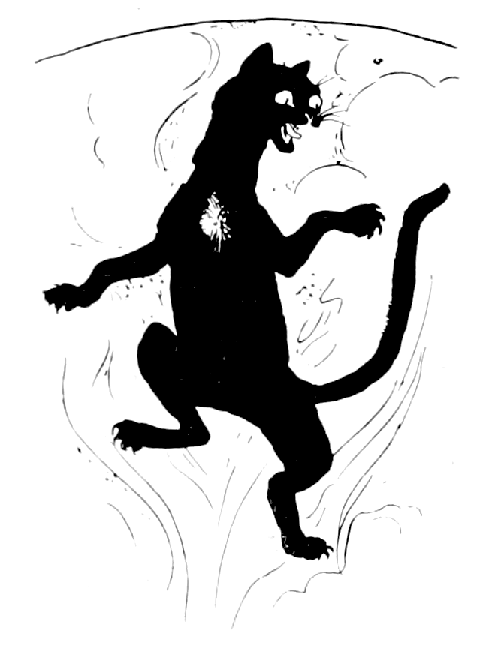
As parasitical Christians proliferated and absorbed Celtic beliefs and values, things got really fucked up for both cats and women. The early Romans had a utilitarian view of cats and they were brought along with invading armies to keep rat populations under control. But superstitious Christian thinking held them in suspicion. Exposure to the Celtic linking of cats with the underworld inspired more magical thinking and suddenly cats were dancing with the devil, and female practitioners of Celtic religions were communing with Satan and were able to shape-shift among other things. The old addage about cats having nine lives actually refers to the belief that witches could shape-shift into cat form nine times.
The idea was cemented in writing by power-hungry Pope Gregory IX in his papal bull of 1233, Vox in Rama, addressing so-called Satanism, the catch-all label for all religions ‘not Catholic’. The 12th to 17th centuries in Europe was one of the most backward, ignorant and testerical periods in European history. Paranoia leading to inquisition, torture, and murder in the name of religion was the norm at that time, and Pope Gregory was reponsible for kicking things into high gear. He even waged an informal war on cats, which led to the torture and killing of many of them, and put cats permanently in the dog house in the minds of Christians. Some argue that the killing of so many cats was the part of the reason that 30-50% of the European population died from bubonic plague in the 14th century. To this day, devout Christians tend not to like cats. A 2019 American study, for example, found a strong, negative relationship between church-going and cat ownership. Christians tend to like dogs, and I think it is for the same reason that men, in general, prefer dogs – I’ll get into that later.

This dark period was also a war on women – athough one could argue that women have always been under attack in this world for one thing or another. A woman didn’t really have to do much to bring the male boot down on her neck, and often it was other women making the accusations, likely in an attempt to garner male approval. It’s interesting. Of the articles discussing the persecution of witches, some say that it was about attacking the powerless and the others say it was about attacking powerful women. I’ll try to clarify because I think the incongruence is just a matter of language. First, there has never been such a thing as a powerful woman in the sense that men have power. Females have always been and still are a class of sub-humans, and they never have and still don’t have the resources to fight back. But these supposed witches weren’t powerful women; they were just women who didn’t follow the rules in some way, or were just convenient, powerless scapegoats. When women don’t fall in line, men get scared. And when men get scared, women get killed or erased in some way. And the killing of women serves the ultimate purpose of stamping out any further inclination towards rebellion in all remaining women.
Skipping Ahead
The negative link between women and cats persists today, although religious paranoia about the supernatural isn’t really a factor anymore. Rather, cats are seen as aloof or disobedient and weak or laughable for some reason. We still use the term ‘cat fight’ to refer to a pathetic style of fighting that is supposedly engaged in between women and that involves scratching and yowling, as opposed to the more manly punching. We also have constant references to the ‘crazy cat lady’ archetype, which describes a pitiable, lonely, older woman who collects cats – the implication being that women who choose not to live with men are pathetic and crazy. And there is a derogatory connection drawn between lesbians and cats – perhaps this is a throw-back to religious magical thinking.
What It’s Really About
I can tell you first off that once I committed myself to female separatism, the only animal I ever considered adopting was a cat. And I’m saying that as a person who grew up only with dogs. Further, after adopting my kitten last year, I realized how much I was missing in my life, and I feel a whole hell of a lot saner having her around.
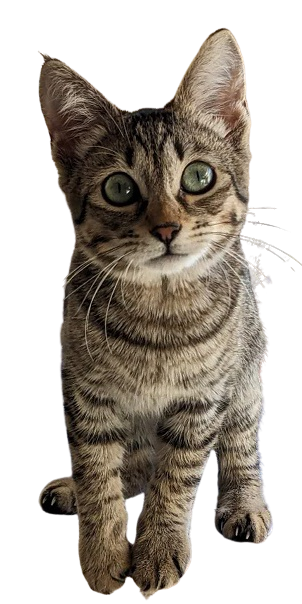
What is really going on is that men love things they can control. Dogs, although I love them dearly, are highly trainable and highly dependent. What is called loyalty by men isn’t actually loyalty, but obedience. Patriarchal women, specifically, and heterosexual women more generally, are actually more like dogs in the eyes of men, slaving for them and craving crumbs of man-love when they do a good job serving them. Cats are social and loving animals, but they are fiercely independent. They aren’t very trainable to the whims of humans, but still manage to find food and shit in appropriate places without human guidance. On the whole, this doesn’t boost a man’s ego, so of course, men denigrate them. Likewise with independent women, especially separatists and lesbians. Women who don’t bend to a man’s will are dismissed as crazy, losers, or just plain stupid and weak. In this way, you can see why devout Christians might not like cats – obedience is key to their way of living. And I’ve met women in the military and women with large broods of children who absolutely hate cats as well. Ditto with the respect for obedience.
So it’s not actually about any real similarities between cats and women because honestly, there aren’t that many, and men will call you a ‘bitch’ one minute and a ‘crazy cat lady’ the next. This is all about control and obedience. And I can’t imagine any woman who truly understands the value of freedom, especially female freedom, who wouldn’t appreciate a kitten or two in her life. ♥ 🐾 ♥
♀️ If you care to support Story Ending Never, we are appreciative. ⚢






 Story Ending Never
You must be logged in to post a comment.