Blog Archives
Q is for Queer
This post is part of the ongoing Alphabet Series. Listen along to my recording on YouTube and/or read the article below ♥♀
from Jane Siberry’s “Mimi on the Beach”, 1984, when ‘queer’ was still a slur in some places. Jane herself is a Canadian gay-lesbian musical icon, although she is not really a publicly declared lesbian, or rather, her sexuality is not part of her public identity. I admire her for this, as I have issues with sexual labels since we don’t understand much about women’s natural sexuality. I only care that she isn’t fucking dudes, and that is not the same thing as identity or labels 😉One girl laughs at skinny guys
Someone else points out a queer
Well, they’re all jocks, both guys and girls
Press the button, take your cue
I think it is interesting to follow issues across generations. Sometimes, feelings on a topic or event will endure across generations despite the young having no true understanding of or real connection to what has happened. For example, I experienced this when I lived in Nanjing, China. My students had a deep and aggressive hatred of the Japanese despite the atrocities committed in their city having occurred two generations prior, despite currently living in prosperity and despite most to all never having met a Japanese person in their lives. But there is a collective memory of the event that is kept alive across generations in places where the Japanese did their worst, so you don’t experience this anti-Japanese sentiment in other parts of China.
You can also witness the opposite – newer generations exhibiting neither understanding of nor sympathy nor empathy for past violence or oppressive acts and thus acting in a very dismissive or flip way due to ignorance. I suppose this can happen when the oppression or oppressed group is not taken seriously by society, there is no collective memory formed, and the impact is not conveyed across time through intergenerational discussion. A good example of this is the long history of the oppression of women. Women don’t acknowledge a shared worldwide trauma due to male violence, and often don’t even know their own class history. Instead, they promote collusion with and subservience to the male oppressor class to new generations of females and punish rebellion. Talk of reality is stigmatized as ‘too negative’.
Likewise with the long oppression of homosexuals. While that oppression still exists, how it manifests has changed in some, but not all, ways. The past use of the word ‘queer’ as a slur that folks from the Baby Boomer generation can still recall, doesn’t resonate at all with today’s youth as there is little to no acknowledgment nor intergenerational discussion of gay and lesbian oppression. And consequently, the slur has, with little consideration, been ‘reclaimed’ and turned into an identity used and abused by many who are not gay or lesbian at all.
So my questions are these: where is the balance between acknowledging and respecting the violence and inequality of the past and being able to move on and be better as a society? And with specific regard to the topic today, can and should historic slurs be reclaimed, and if so, who should be allowed to do so? And can reclamation be considered appropriation, if the ones doing the reclaiming are not members of the historically slurred group?
Now I do have my own opinion regarding the reclamation of slurs and other hate speech. But I’m not going to tell you what to think until the end, as this is a topic of debate and I’m not sure if there is an objective right or wrong answer. There are probably points to be made on the various sides. What I will say is that what is objectively true is that society is not uniform in the application of their opinion to different groups, and I think it is a matter of respect-giving due to the presence of males in oppressed groups. Groups focused on females only or mixed groups that don’t conform to patriarchal gender expectations are universally discounted, censored and disrespected, while racial and religious groups, which have macho males and compliant females within its ranks are respected and allowed to have and talk about a shared history. As a result, we are still dealing with supposedly reclaimed and repurposed slurs against women and homosexuals, while this is never an issue for racial and religious groups.
So, I’m not going to go through a whole history of queerdom here. This has been done elsewhere in numerous places, although not always very well. I’ll briefly touch on the whens and whys of the repurposing of the term queer, and I’ll spend more time talking about why queer identity might be so popular amongst younger people today even though they are not themselves the creators. And then you can make up your mind about the whole thing yourself.
The Reclamation of Queer
At the risk of oversimplifying a development in thinking that is needlessly convoluted, I’ll say the following: I believe the reclamation of ‘queer’ came out of the academic thinking on the ways of knowing and being posited by poststructuralism and postmodernism coupled with a typical, youthful, cultural rebellion against the norms of society. The former talked about there being no real truth. All reality is subjective. Everything is socially constructed and rooted in power dynamics and systems. Nothing, including words or language, has a singular meaning that we can all understand. And the latter did what all generational rebellions do – they challenged what was mainstream at the time and proposed an opposing way of living life and finding one’s place in the world. But remember that all rebellious movements end up the same way – in their efforts to ‘not conform’, they end up being very conformist. It is very much like how oppressed groups that rise up aggressively and even violently end up becoming oppressors eventually. We’ve seen both trends in counter-culture movements throughout time.
Anyhow, when applied to sexuality, we ended up with queer theory and the development of queer as an identity. It challenged the idea of ‘fixed identity’, especially fixed sexual, gender and sexuality identities, and it attacked the use of what was considered to be constructed binary categories, including male/female and gay/straight. Everything is socially constructed, even the things scientists know are biologically based and objectively true, so everything is open to interpretation and is fluid in its existence. Basically, nothing means anything, and we have nothing to anchor our understanding and communication.
But, the movement and theory offered people who didn’t feel they fit in the means and permission to create their own way of knowing and being that was unique and special and to house it under the umbrella term ‘queer’. Using the former slur to describe a new identity caught on in the 1980’s and 1990’s, and despite the passage of time, it is still as undefinable and hard to understand as it was in the beginning – perhaps even moreso with the development of more and more and more micro-identities and associated jargon and labels. There are million of examples of people trying to explain their queer identities online, and I’ll provide one here to illustrate how unuseful all of this is.
“Bisexuality it doesn’t encapsulate the nuance of my sexuality – Here’s what that means. While I find cisgender men attractive, I am not authentically me when I date them. For me, “bisexual” means being sexually attracted to all genders and gender expressions, but “homoromantic” means I only have romantic feelings in queer relationships. Because this is a little complex, I just say “queer.”
Okay, so I had to read that a few times, and in the end, I still didn’t understand who this person was, or not that I care, whom they are willing to date. I have found with the queer that ironically, in trying to ‘identify’, they end up being completely unidentifiable – in other words, extremely hard to pin down and get to know. How can you make a substantive friendship with someone if you don’t understand who and what they are and what they think and what the hell their words even mean?
Now, personally, I don’t care about people’s constructed identities. As far as I’m concerned, you can call yourself whatever you want in your private life, and I oppose constructed categories for women as a rule. With males, I’m fine putting them in a single box called ‘predator class’ and then staying the hell away from them as much as possible. But I am invested in females finding and developing their natural selves apart from male oppression. But postmodernism, queer theory and queer identities don’t solve this problem for women. Rather, they make the problem worse by taking meaning away from things that actually mean something historically, and politically, and sometimes, objectively. When you’re talking about things concerning historically oppressed groups, the personal is always political. So the actions of the so-called queer have had massive sociopolitical effects on those for whom the slur, queer, was originally intended: gays and lesbians. For example, queer studies has taken over gay and lesbian studies departments and courses, which were initially rather difficult to establish due to homophobia, and this has served to erase the long oppression of homosexuality and to refocus on the queer, many of whom are not oppressed or whose proclaimed ‘oppression’ usually just ends up being bullied because of having pink hair. Further, Pride and other extremely important cultural and political groups and events have also been infiltrated and taken over by the queer, which has served to alienate the very people who started the groups and movements. Gays and lesbians who refuse the queer label and who oppose the takeover of queers, institutionally and culturally, are then labelled exclusive, bigoted, phobic of one form or another, and experience, yet again, the censorship and even violence that they’ve struggled with throughout history. The ‘inclusive’ focus of the queer has served to erase historic oppression and to impose a ‘join or die’ ultimatum on people who have very secure and easily definable sexual identities and have fought hard to have them recognized.
The Rise of Queer Identities Among Youth
It’s interesting to note that queer wasn’t born during the Millennial or Gen Z generations, but has taken hold with them and is perpetuated, or maybe ‘marketed’ is the better word, through their social media personas. Why would something that came from from theory proposed by members of the Silent and Baby Boomer Generations, and peddled to members of Gen X – my generation – be so appealing to today’s young people? I’ll propose some thoughts and if you have any of your own, I’m happy to hear them.
- Queer has something very adolescent about it that hasn’t matured over the years. In essence, it comes across as youthful identity-seeking, which is a normal part of growing up. Every generation has its counter-culture. And if it weren’t queer, it would be something else. It actually doesn’t matter what the identity is, as long as it goes against the mainstream. And while a minority might actually understand the sociopolitical origins of this identity, most don’t and only cling to the identity to feel like they are opposing something bad, and perhaps to find some superficial pleasure in the required fashion and its shock value in the general public. In my generation, although queer was finding a foothold, the trendy, counter-culture identity was punk. Most punkers at the time didn’t really understand what the movement was about in a deep way, but revelled in the fashion, the reactions they received, and the false feeling that they were changing the world. And I think you can say the same about the queer movement. But regardless of counter-culture identity, all you need to do is to ask adherents what they believe, and you’ll find out where they’re coming from. Most will be unable to provide a coherent answer, a contingent will have memorized all the talking points and will come across as militant robots who will kill you if you oppose them, and a tiny minority will actually be able to speak with intelligence and nuance about their beliefs and their actions that support their beliefs.
- Coupled with 1), many people identify as queer due to social contagion, peer pressure and the need to conform and belong while ironically feeling like they are nonconformist and renegade. At this point, there is almost a cult-like recruitment aspect of the queer identity, and like a snowball rolling down a steep hill, it is hard to avoid getting caught up in the slogans and self-righteousness of queers pretending to fight along social justice lines.
- We are living in the most narcissistic period in history, and I don’t mean clinical narcissism, I just mean an overblown self-centredness or egotism. This current time period is marked by a need to be a) special and liked coupled with a need to publicly and widely advertise one’s real and, if need be, newly minted, oppressions. Queer is notoriously inclusive, which allows people with extremely easy lives the chance to take on an oppression identity and use it as a weapon against targeted enemies. The funny thing is that queer people with actual, but socially unacceptable, oppressions will often overlook or fail to acknowledge them in favour of a made-up oppression that is more fashionable or accepted. A good example of this is women who refuse to acknowledge that they are oppressed as females because the world refuses to do anything about this longest-running human rights issue, but will latch onto undefinable and meaningless queer identities that give them a highly supported whining oppression platform.
- It allows people to escape gender conformity without actually naming the real problem and suffering the consequences of truth-telling. The real problem is male domination of females, but it is much easier to shave your head or stop wearing dresses, call yourself queer and drop barrels full of shit onto radical feminists or non-queer gays and lesbians. You can’t make progress on social issues if you don’t understand why the issues exist to begin with and who is actually responsible for creating and maintaining them. So many rebellions and movements arise without deep analysis or understanding on the part of the soldiers fighting the war. This is nothing new.
- If you are a lesbian, you will get more approval calling yourself queer than lesbian. These days, many things that are seen as ‘exclusive’ are the target of eradication. Inclusivity, even if it erases small, but significant, oppressed groups, is the goal of today’s movements. And when we talk about exclusivity, let’s face it, we are talking about excluding men from women’s lives and allowing females to be free from male violence and oppression. Racial groups (except whites) are still allowed to be exclusive, of course, because males are still part of those groups and still run the show in all cases. But any group that excludes males is deemed oppressive and must be destroyed. This is a relatively recent development in Western culture and it represents a backward slide in human rights, in particular, women’s rights, and even more particularly, in lesbians’ rights. There are a few people still fighting eradication. The Get the L Out group based in the UK is one such group, and they are the targets of heaps of abuse.
- It still supports the established power structure while feeling like positive social change. Queer is a male-dominance movement if you strip it down and look at it honestly. A lot of today’s queer fuel comes from the trans cult, which is as pro-male, pro-gender, pro-female-submission, and pro-lesbian-erasure as any conservative or macho movement. I’m still convinced that groups that have sociopolitical power and make changes that happen relatively quickly are, under the surface, not changing anything at all, but supporting the existing power structures and systems.
Conclusion
To come back to my initial questions. I’m a big fan of balance, but I think it is really hard to find in this world. We either cling to the past with irrational, unanalyzed emotionality in order to maintain oppressive systems, or we erase the past and replace it with something looks different, but still doesn’t change those oppressive systems. What would it look like to actually acknowledge what is going on…?
Finally, with regard to slur reclamation, I’m of the opinion that we should treat slurs like any museum exhibit. Preserve the memory and meaning, and then leave it in the past, but under glass for all to see if they choose. I don’t think keeping something in active circulation strips it of its former power, and I think it is a mark of disrespect to attempt this. In the case of the queer slur-turned-identity, I don’t think anything has been achieved. While initial reclamation was by gays and lesbians in the 1980’s – the actual targets of this slur – today, it is used by people with no historic claim to it. I think that is disrespect and a demonstration of ignorance. But you can make up your own minds, of course. As I said earlier, this is a topic of debate, not a mathematical proof with a clear, correct answer.
♀️ If you care to support Story Ending Never, we are appreciative. ⚢
L is for Lost Post – K is for Kitten
This post is part of the ongoing Alphabet Series. Listen along to my recording on YouTube and/or read the article below ♥♀
A long, long time ago,
from Phenomenal Cat, by the Kinks
In the land of idiot boys,
There lived a cat, a phenomenal cat,
Who loved to wallow all day.
Happy Belated International Cat Day ♥ 🐾 ♥

The following is dedicated to my own phenomenal kitten who has just reached her first birthday. Although she is entering adulthood, she’ll always be my kitten. We’re a good match. Like me, her adoptive mother, she is a militant atheist and fierce female separatist. She is the right combination of zen and wild. She loves to wallow, and to pretend to bite my computer cables to catch my attention. She cuddles for short, but intense sessions, and attacks my sock-covered hand with the skill of a true hunter. Every morning around 4:00 am, she gifts me with a thorough facial dermabrasion, and she rides along on my shoulders as I prepare my morning coffee. As you may have guessed, I love the little nugget.

If you’re a fellow cat lover, have a browse through the Kitten Chronicles on my YouTube channel, where I feature select moments in time in the life of my little furball. For now, join me on a bit of a self-indulgent post celebrating K is for Kittens where I explore the link between cats and women, and why the connection has mostly been, in the eyes of men, a negative one.
.
The Roots

Men have a tendency both to dehumanize the human, and to anthropomorphize the non-human, so it’s no surprise that they have fabricated stories of strange relationships between women and various animals and to equate women with animals, body parts, tools and objects with great success. This is partly due to male fear of a more complete human, and partly rooted in the magical thinking of long-gone primitive cultures that were animistic or that connected their gods with animals. It is possible that women were slightly – emphasis on the slightly – more respected in ancient times. We have evidence of female deities with animal attributes, of course, which is in contrast to modern monotheistic, phallocentric religions where women are both the source of all evil and the unremarkable vessels for men’s seed. But in no culture have women either been free of men and their control and violence or even just on par with them. Strangely, there are always efforts made to try to prove that conquered or diminished cultures of the past, especially animistic cultures, such as various Native American tribes and the insular Celts of the British Isles, somehow managed to achieve ‘equality’ or harmony between the sexes. Modern fantasists, especially women, for some reason, tell made-up stories of sex equality and lady power in these cultures without a shred of proof to back them up and sometimes even in the face of evidence to the contrary. I think this is mostly done to establish a false narrative ‘proving’ that males were once better people, so therefore they can be better again. In that way, men and boys are protected from getting what they deserve when they commit crimes against women and girls, and the onus is put on women to accept, forgive and save men thereby keeping women’s focus and energy away from themselves and maintaining the system of their own oppression.
What is actually more logical and believable, and in many cases proveable, than this fantasy version of the past is that men have dehumanized women since human time began. There has never been an equal or free society for women. And rather than the dehumanizing abating with increased human education and enlightenment, it has only gotten worse and more normalized because of phallocentric and monotheistic religion, general androcentrism, overpopulation, and more recently, access to communications technology and the proliferation of pornography and other media promoting woman hate under the guise of male entertainment. And as alluded to above, men have dehumanized women in a number of ways, including reducing them to their body parts (cunt, pair of tits, or piece of ass), rerferring to them as male-constructed archetypes (slut, whore, hag, or ice queen), and likening them to animals (cow, bitch, sow, filly or cat).
So let’s talk pussy.
Exactly when men started connecting cats with women, we are not sure, but their thinking, deep as it usually is, seemed to go something like this: “Um, cats have lots of babies. Women have lots of babies. So they are similar. Oh, yeah, and um, cats like to hang out in the house. And women hang out in the house. Holy shit. Cats and women are like totally the same!” And lo and behold, the cat-lady-goddess was born to various ancient cultures, and predominated over – you guessed it – fertility, beauty, motherhood, and children.

Some of the earliest evidence of the cat-lady-goddess comes from Ancient Egypt, but these chicks were a little more powerful and rounded out than the simple incarnation in later cultures. The goddesses Mafdet, Sekhmet and Bastet were all depicted with feline heads atop women’s bodies. They were all fierce protectors; Mafdet was the early goddess of justice and execution and had the head of a cheetah; Sekhmet, with the head of a lionness, oversaw war and medicine; and later, Bastet, with a domesticated cat head, represented the home, fertility, childbirth, and joy. Cats were highly respected in Ancient Egyptian culture, and were believed to have magical powers, to be lucky, and to be very clever. They were often painted, seated under the chairs of women, and were considered to be fertile creatures, and thus, the natural companions of women. Ancient Egyptian women certainly had more freedom and power than women in other regions and cultures at the time, although there was by no means anything resembling respect, equality or freedom from male violence. But the cat-female-human link was established in a more positive way then than in any other time in history, including now.

In other religious traditions that included female gods, there continued to be links between cats and love, fertility, children, motherhood, cleverness, and hunting. Freyja, the Norse goddess of love, beauty, fertility, sex and war, rides a chariot pulled by two cats. Shashti, the Hindu goddess and devourer-turned-protector of children is depicted riding a cat. In Chinese mythology, Li Shou (Lí Shǒu, 黎手) was a cat goddess. Interestingly, the ancient Chinese believed that cats were orginally nominated by the gods to rule the world, but it turned out they liked playing and wallowing more. They gave up their power to human males, and while they lost their power of speech, they became the timekeepers of the world. We see the sun’s movement reflected in their eyes and hear the movement of time in their purr.
Things Get Dark
One theme that was common in many later cultures was the linking of cats with magic and with the underworld. It can get a little confusing to understand the true feelings people and cultures had towards them as they didn’t usually keep written records, but it reminds me of the place that women have held in all societies – sort of a mixed awe and fear that usually ends up manifesting in ‘want you, but hate you’ relationships. The Celts were a prime example of this. They believed that cats were guardians of the underworld and some believed that they were humans forced to return to the world after death following misdeeds in life. Some believed that they could take souls, and they were the companions of wise women who later came to be known as witches, which provided fuel for the brutal Christian persecution of women in Europe and the US. Despite what Celtophiles say, Celtic society was not woman-loving or equal. While some tribes may have had female warriors, slavery was rampant, and the cumal or ‘female slave’ was a prized unit of currency. Men were allowed to kill their wives and women were often passed around for sexual use in families. So we had a culture that held cats in suspicious semi-respect and that saw women as things to be used and disposed of. This provided ample fodder for the primitive Christian brain as it swallowed up the Celts of Europe during the expansion of the Roman Empire.
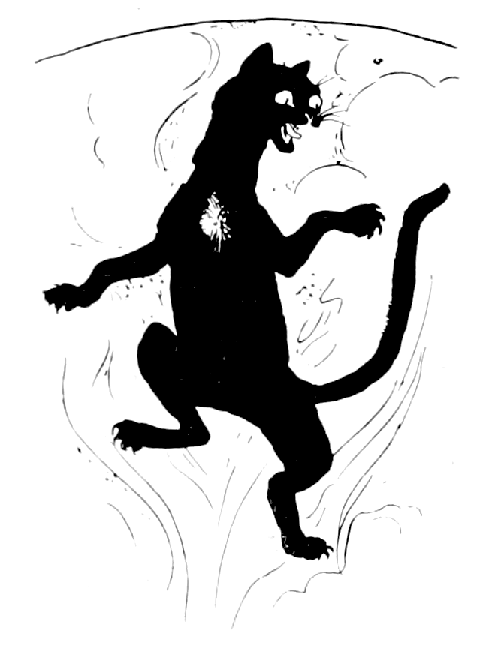
As parasitical Christians proliferated and absorbed Celtic beliefs and values, things got really fucked up for both cats and women. The early Romans had a utilitarian view of cats and they were brought along with invading armies to keep rat populations under control. But superstitious Christian thinking held them in suspicion. Exposure to the Celtic linking of cats with the underworld inspired more magical thinking and suddenly cats were dancing with the devil, and female practitioners of Celtic religions were communing with Satan and were able to shape-shift among other things. The old addage about cats having nine lives actually refers to the belief that witches could shape-shift into cat form nine times.
The idea was cemented in writing by power-hungry Pope Gregory IX in his papal bull of 1233, Vox in Rama, addressing so-called Satanism, the catch-all label for all religions ‘not Catholic’. The 12th to 17th centuries in Europe was one of the most backward, ignorant and testerical periods in European history. Paranoia leading to inquisition, torture, and murder in the name of religion was the norm at that time, and Pope Gregory was reponsible for kicking things into high gear. He even waged an informal war on cats, which led to the torture and killing of many of them, and put cats permanently in the dog house in the minds of Christians. Some argue that the killing of so many cats was the part of the reason that 30-50% of the European population died from bubonic plague in the 14th century. To this day, devout Christians tend not to like cats. A 2019 American study, for example, found a strong, negative relationship between church-going and cat ownership. Christians tend to like dogs, and I think it is for the same reason that men, in general, prefer dogs – I’ll get into that later.

This dark period was also a war on women – athough one could argue that women have always been under attack in this world for one thing or another. A woman didn’t really have to do much to bring the male boot down on her neck, and often it was other women making the accusations, likely in an attempt to garner male approval. It’s interesting. Of the articles discussing the persecution of witches, some say that it was about attacking the powerless and the others say it was about attacking powerful women. I’ll try to clarify because I think the incongruence is just a matter of language. First, there has never been such a thing as a powerful woman in the sense that men have power. Females have always been and still are a class of sub-humans, and they never have and still don’t have the resources to fight back. But these supposed witches weren’t powerful women; they were just women who didn’t follow the rules in some way, or were just convenient, powerless scapegoats. When women don’t fall in line, men get scared. And when men get scared, women get killed or erased in some way. And the killing of women serves the ultimate purpose of stamping out any further inclination towards rebellion in all remaining women.
Skipping Ahead
The negative link between women and cats persists today, although religious paranoia about the supernatural isn’t really a factor anymore. Rather, cats are seen as aloof or disobedient and weak or laughable for some reason. We still use the term ‘cat fight’ to refer to a pathetic style of fighting that is supposedly engaged in between women and that involves scratching and yowling, as opposed to the more manly punching. We also have constant references to the ‘crazy cat lady’ archetype, which describes a pitiable, lonely, older woman who collects cats – the implication being that women who choose not to live with men are pathetic and crazy. And there is a derogatory connection drawn between lesbians and cats – perhaps this is a throw-back to religious magical thinking.
What It’s Really About
I can tell you first off that once I committed myself to female separatism, the only animal I ever considered adopting was a cat. And I’m saying that as a person who grew up only with dogs. Further, after adopting my kitten last year, I realized how much I was missing in my life, and I feel a whole hell of a lot saner having her around.
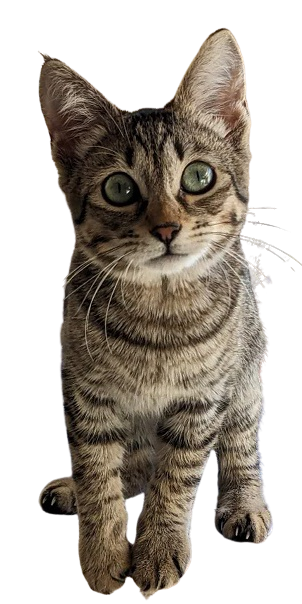
What is really going on is that men love things they can control. Dogs, although I love them dearly, are highly trainable and highly dependent. What is called loyalty by men isn’t actually loyalty, but obedience. Patriarchal women, specifically, and heterosexual women more generally, are actually more like dogs in the eyes of men, slaving for them and craving crumbs of man-love when they do a good job serving them. Cats are social and loving animals, but they are fiercely independent. They aren’t very trainable to the whims of humans, but still manage to find food and shit in appropriate places without human guidance. On the whole, this doesn’t boost a man’s ego, so of course, men denigrate them. Likewise with independent women, especially separatists and lesbians. Women who don’t bend to a man’s will are dismissed as crazy, losers, or just plain stupid and weak. In this way, you can see why devout Christians might not like cats – obedience is key to their way of living. And I’ve met women in the military and women with large broods of children who absolutely hate cats as well. Ditto with the respect for obedience.
So it’s not actually about any real similarities between cats and women because honestly, there aren’t that many, and men will call you a ‘bitch’ one minute and a ‘crazy cat lady’ the next. This is all about control and obedience. And I can’t imagine any woman who truly understands the value of freedom, especially female freedom, who wouldn’t appreciate a kitten or two in her life. ♥ 🐾 ♥
♀️ If you care to support Story Ending Never, we are appreciative. ⚢
K is for (Mr.) Kaplan
This post is part of the ongoing Alphabet Series. Listen along to my recording on YouTube and/or read the article below ♥♀
Greetings one and all. Did I not promise a post sometime in the month following the last one? Well, I’m delivering. Kaboom! To be honest, I am writing this to take a break from the massive amount of work that I’m currently immersed in. Writing is relaxing to me. Teaching is not. So, I’ll do a little segue here before launching into my main topic.
After years of teaching university in the poorly paid, Chinese public education system, and after a pandemic-inspired, lengthy, unemployed period that was awesome for my physical health, but not great for the soul or pocketbook, I managed to land a job in a high school back on the Asian continent. Now, I haven’t taught high school in over a decade and there is definitely a reason for that… But the world has been closed, jobs have been nearly impossible to get, and Canada is one hell of an expensive place to live when you are a deliberately single female – and especially one without children and the myriad financial benefits that go with that. So, after hundreds of applications and then being dicked around by a few potential employers and then again by several abusive online companies looking to pay experienced, educated teachers $5.00 an hour, I felt lucky to land a job at all. I felt lucky even though anything below university level is usually a nightmare simply because outside the Western world, teachers actually have to work harder than the average worker, and certainly harder than any Western teacher. I’m talking 6 teaching days a week, including evenings and Saturdays, and then all the prep and homework/test grading that always ends up leaking over into most of your Sunday.
But here I am. It’s not all bad. I think the hardest part is being a seriously introverted (although feigning extroversion) person forced to be ‘on’ and interacting with people for hours and hours and hours at a time. A true introvert may actually like people, but their energy comes from non-social sources and they can be seriously depleted and weakened with prolonged interaction. Introverts forced to deal with extroverts may come away feeling ‘vampired’. Energy-sucked. (I made the mistake of spending 8 hours with a major extrovert who was a straight breeder, male apologist, and BLM-supporter on top of that, this past spring. I had to spend much of the next day in bed recovering, I felt so horrible.) So let’s just say, that after a week-and-a-half of classes and being forced to spend my non-classroom hours in a teachers’ room used by 60 teachers, but that only seats 25, I’m feeling like absolute shit, energy-wise. But it’s a job, right…?
Back to the topic at hand, though. The next post in the Alphabet Series. Interestingly, and not planned in any way, I could have used my newly adopted region as my K-word, but I don’t know enough about the place yet to write anything truly interesting. Maybe in the future if I ever get time out of what feels like a new cage…
But for today, K is for (Mr.) Kaplan.
I considered a few uninspiring options before settling on the great topic of Mr. Kaplan. Who could forget ‘Karen’ – a racist, sexist, ageist slur and silencing term used against middle-aged white women who dare speak out about anything, including their own rapes. I’ll refer you to RadFemSpiraling who does this topic justice in a way that I haven’t and who, in my opinion, is the de facto leader of the unofficial celebratory Karen Klub. Rock on. K is also obviously for kill, something men like to do to women often after raping them or just because they are throwing a mantrum and can’t handle their own blatant obsolescence. K is for kink, now mainstream rather than an ‘alternative lifestyle’, and used as a weapon to shame women into consenting to sexual abuse, torture, and rape by men so as not to appear boring, prudish or a goddamn lesbian of the non-man-fucking variety (!) K is for kindness, one of the new obnoxious, finger-wagging words used by the Cult of Positivity to shame women into accepting abuse by men and their bitches and into keeping their mouths shut to prevent their ‘toxic negativity’ (aka truth-telling) from spoiling the illusion that everything is hunky dory in the world. K is also for knowledge – the barring of the accumulation of which is a cornerstone of slavery – prevent education and slaves don’t realize they’re slaves. Finally, k is for kitchen, as in “get back in the”.
But let’s get to Mr. Kaplan.
Many of you may be wondering who the hell this is, and may have noted that this is one of the rare times that I’ve written about a person using their name. Mr. Kaplan is, despite the honorific, a woman, and she’s entirely fictional. She, in and of herself, isn’t that important, and it doesn’t really matter whether you know who she is or where she comes from. It is what she represents that is important here. She’s a supporting character on a way-too-long-running American television show.
She’s fictional. She’s in her 60’s. She is neither especially masculine nor feminine, and is what society would call ‘plain’. And she is a lesbian. One of the few on television, and certainly one of the very, very few who is over the age of acceptable fuckability. In fact, there are so few older lesbians portrayed on television that there isn’t even a stereotype for what they should look like.

Mr. Kaplan, aka Kathryn ‘Kate’ Nemec, played by the spectacular Susan Blommaert, is the highlight of, and dare I say, the only reason to watch a series called The Blacklist. In a nutshell, James Spader (the lead actor) plays an international criminal who turns himself into the FBI to get close to a young and silly female agent for unknown reasons in exchange for helping to catch major international criminals. It’s not the most interesting of premises, and I feel like we’ve seen this theme before many times. Mr. Kaplan is the Spader character’s ‘cleaner’, and we get to know her gradually over the four seasons that she is allowed to exist, including how she came to adopt the nickname ‘Mr. Kaplan’ and how she came to be forced into the employ of the Spader character. In my opinion, if you feel you need to watch the show, you can stop when she is killed off; there wasn’t much to stick around for after that.
As you may have guessed, I don’t actually recommend The Blacklist. It is a misogynistic vanity production – James Spader is not only the lead character, but also one of the Executive Producers, which may explain why such a show managed to stick around for 10 excruciating seasons. I’ve read male commentary on the show and found it hilarious and typical how ‘versatile’ they think Spader is as an actor. In reality, he’s pretty 2-dimensional. Since his youth, he has continuously played weird and aggressive, often psychopathic, males with some sort of inexplicable sex appeal. Whatever looks he may have once had disappeared long ago, but he still embarrassingly tries – unsuccessfully, I might add – to pull it off in his older years. Even in one of his last major television roles as the narcissistic psychopathic CEO of Dunder Mifflin for a season of The Office, he was almost a carbon copy character of what he does on The Blacklist. It’s a role he does well, but it is only because he’s a bit of a one trick pony despite the undeserved kudos males give him. And it is actually rather easy and natural for males to play narcissists and psychopaths for obvious reasons, and I don’t credit male actors with much talent when they manage to pull off a convincing bad guy. Anyhow, The Blacklist exists to give the flagging Spader a platform to monologue endlessly, especially about unbelievable sexual exploits and to give cameo appearances to other ugly old male actors with waning careers. It also helps that the female lead is not only poorly written – a standard post-year-2000 stupid smart girl who gives an abusive male 1001 chances to stop abusing her – but she is also sadly played by a rather untalented actress, Megan Boone, who spends more time striking a pose than delivering convincing lines. But for men to shine as actors, they must surround themselves with greater mediocrity than their own and prevent the real talent from showing up. Boone makes Spader look good, relatively speaking.
To get back to Mr. Kaplan, she does have a major flaw, and I blame this on male and straight female writers. She has this bizarre devotion to other people’s children. Despite being medically trained with graduate degrees, ability in multiple languages, talent and intelligence, she devotes her life to being a nanny and subordinate of glorified housewives and tantalizing, slutty, bad girl-mommies who order her around and treat her like shit. I guess this is supposed to sit better with the ignorant, lesbian-hating, American viewing public. If you must have a lesbian character at all, and especially one who isn’t young or hot, then you absolutely must make her obsessed with children as the poor dear clearly laments not being born a straight breeder – a true woman.
But despite this flaw, Mr. Kaplan’s final season as a live character is worth watching as she finally grows a pair of ovaries and takes her revenge on the Spader character for his years of bullshit. But even that comes to an acceptable end in the eyes of the American public when the male-powers-that-be decide she has to be killed off for being too interesting and multi-dimensional. Seriously, she is infinitely more interesting than the Spader character, and we couldn’t have that now, could we…? Curiously, the creators of the show initially wanted Mr. Kaplan to be played by a man. But I guess men can’t play nannies… unless it is supposed to be a joke. And this character wasn’t created for comic relief. Nevertheless, I can’t even imagine Kaplan as a male now – they did such a surprisingly good job of casting Blommaert in the role. Really, she was the only really interesting thing about the series.
So I conclude with this: Will the portrayal of an existing and significant, but largely deliberately ignored segment of the population open the door to more lesbian characters, especially of the non-stereotypical variety? Probably not – at least not in the way that gay males and even male trannies have been embraced by television writers. But perhaps slowly, over the next thousand years, if we still have television and haven’t completely destroyed the planet and our couch potato lives, we’ll have a few more interesting lesbian characters to follow.
♀️ If you care to support Story Ending Never, we are appreciative. ⚢




 Story Ending Never
You must be logged in to post a comment.