Blog Archives
N is for NPD (Narcissistic Personality Disorder) – Part 3
This post is part of the ongoing Alphabet Series. Listen along to my recording on YouTube and/or read the article below ♥♀
I was on the brink of turning 21 when I headed into one of the worst summers of my life. I had just finished my first year of university in a small city far enough away from my NPD family to escape casual family visits, and for the first and last time in my life, I returned to my hometown and my chief abuser’s house for the summer.
I hadn’t realized how much just 9 months away from a toxic environment would change me. I had hated high school, I had hated working full time as a secretary in order to earn money to go to school, but at university, my world had opened up. And more important, I finally noticed the extent of my mother’s abuse. Within 2 weeks of being back, everything fell apart. My parents had divorced when I was 17 and in the fall out, I threw myself into school, my younger sister quit high school, moved in with a drug dealer, and got knocked up, and my younger brother became invisible, although as a boy, he was the favourite child and was mostly left alone. But three years later, after I, the truth-teller and major threat to my NPD mother, re-entered the diminished family home, the shit hit the fan.
My brother and I had gone out with my father and his girlfriend and we got back to my mother’s house rather late at night. On the kitchen table was a picture my brother had drawn. My mother, who was nowhere to be found upon our return, had clearly found the picture and had left it out as a sort of warning. What she had discovered was a family portrait that included a woman that was clearly not my mother – wrong hair colour. Dismissing it, as it didn’t seem like a big deal to me, I went downstairs to my room to get ready for bed, but was interrupted by some shouting and door-slamming. I crept silently upstairs. The bathroom door was closed and I could hear my almost 16-year-old brother crying. Very unusual. And my protective rage flared up in me as I realized what had happened. And for the first time in my young life, I went on the attack. After checking on my brother, I walked calmly to my mother’s bedroom door and in a low and even voice, let her know what I felt. I used a few choice expletives – something she had never heard me do before. Then I walked downstairs. I didn’t get far as the dragon jumped out of bed, chased me to the kitchen and punched me in the stomach, screaming at me the entire time. I indicated that I was going to call the police since she had hit me, and mother countered with oh no, she was going to call the police because actually I was the one who had hit her. I didn’t have the insight or the language at this point in my life, but this was classic gaslighting.
Somehow, I ended up back in my room and I called my father, who immediately came to pick me up. I was emotionally frozen, not just because of my mother’s behaviour, but also because it was the first time in my life that I had stood up to her. I’ll leave out a lot of the detail here, but I’ll just mention that less than a week and a half later, I found out that my mother was going out of town, and I went to her house to pick up all my things and to drop off her key. But when I got there, I couldn’t find any of my things and my bedroom was filled with another woman’s belongings – in my drawers, on the unmade bed, and on the floor. In less than two weeks, my mother had replaced me completely, and not only continued to take the exorbitant child support that my father was paying her to NOT care for me – I didn’t live with her and I paid for most of my own education and living expenses even before this – but she was now taking rent from a complete stranger. It was at that point in my life that I cut off my mother completely, and over the next year, found a way to support myself financially 100% working several part-time jobs and going to university full time. My father wasn’t interested in helping me with money even though he made six figures a year, but he seemed to take immense satisfaction in now being in sole control of emotionally manipulating me. He was a narcissist himself, but had taken a back seat in the abuse while he was still married to my mother. My brother, whom I had defended, completely blamed me and sided with my mother – typical golden child. My sister, who hated my mother more than anybody actually, ended up siding with her in order to benefit financially after having her teenaged pregnancy. In the years following my break with the family, my mother went on a rampage contacting everyone I knew to tell them I was insane and every so often, she would recruit family members and whatever man she was fucking at the time to try to manipulate me by proxy in order to get me back under her toxic narcissistic control.
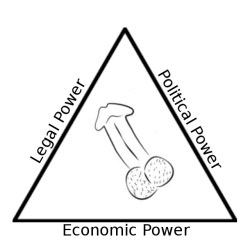
This is an example of the most extreme and difficult, but effective, way of dealing with narcissistic abuse. It is usually called ‘going no-contact’. It is the route most often taken by truth-tellers and scapegoats – those of us who are least likely to become enablers, even if we are highly empathic people. All ways to deal with NPDs are difficult, but I believe this one is most difficult because you will lose more than just the NPD relationship, if it is a family situation. Likely, you will lose most to all of the other family relationships because they are, for the most part, enablers and some receive financial and other perks in exchange for tolerating abuse. And I lost most of the people in my family in the aftermath, and deliberately went no-contact with my increasingly abusive narcissistic father when I was 27. Losing an entire network is hard. As a woman, especially if you aren’t straight, it will be even harder because the only way for women to gain any kind of pretend power or the pseudo freedom that money can bring in this world is to suck dick. Now, I didn’t get much financial support from my family, even as a child, so I was used to having to pay for what I needed. I started working and saving regularly when I was 12 years old. I’ve always been poor, but I learned frugality and financial creativity and resourcefulness out of necessity, especially because I knew from a young age that I never wanted to suck dick in exchange for food or a home. I was very clear that I didn’t want to end up like my completely useless patriarchal mother.
The other issue you experience with going no-contact is that you can’t talk about what has happened to you. Most people don’t understand what NPD is, and no one believes that mothers are abusive – despite what mothers claim. I learned very quickly to tell people the bare minimum – and a semi-lie at that – when they asked about family. My parents were dead and I was an only child. And honestly, these felt true in my heart. The bonus is that people feel awkward when they hear this and don’t ask any follow-up questions. This may sound harsh and this is really hard to rationalize as a truth-teller who values clear discussions of reality, but after a lifetime of gaslighting and shaming despite being the victim, you really aren’t interested in more of the same.
Now, I haven’t done what I probably needed to do to become a healthier person partly because I’m a loner and partly because, thanks to my father, I don’t really trust people in the helping professions, even if I see that they may have value for others. I didn’t learn about personality disorders in depth until I got to grad school in psychology and worked on a few projects with some clinical students. But I didn’t put it all together in my own life until my late 30’s. And actually, a lot of victims of narcissists don’t realize what’s going on until they are older and have lived through a few bad and repetitive abusive patterns and start looking for answers.
Myself, I spent a lot of time self-examining to figure out what was wrong with ME, thanks to how my psychologist father had pathologized me and my reactions to abuse. It wasn’t until I was in my late 30’s and met a woman like me at a youth hostel where I was work-staying. We had been talking about a scary domineering woman who had passed through the hostel and how we both had tried to avoid her and had felt some rather serious emotional reactions to being around her. This other woman gave me insight and recommended the web site Daughters of Narcissistic Mothers – it had helped her figure out why her life felt like a disaster and why she was so affected by certain kinds of women. I devoured the site wondering if it had been written about me. I had already read so much and even had a couple of degrees in psychology, although not clinical psychology, but I could never identify what I had experienced. But so much more work has been done on personality disorders since my youth, not all of it necessarily beneficial, I’ll add. But I now had a context for my experience. While it might have been nice to have had a support group at the time, just being able to identify the problem did so much for my healing process. I think I’ll always be vulnerable to narcissists, as a truth-teller and a woman – they are very good at targeting threats to their control and power. But I am now very good at identifying them and I avoid them when I can. I’m just not the kind of person who is able to employ some of the strategies I’ll talk about below as I’m a sensitive person and have a hard time compartmentalizing. I’m a resilient person, but I have my weaknesses and vulnerabilities. This is normal and it is perfectly okay to have weaknesses, but it is important to know yourself and what you are capable of dealing with. Personally, I don’t think we can overcome anything and everything. We can just manage problems. So don’t let anyone tell you how you should be reacting just because it works for them.
In my opinion, there are only a few paths you can take when dealing with NPDs. If you choose to go into therapy or if you live in a culture where family is sacrosanct, going no-contact won’t even be entertained as a possibility. For those in abusive romantic relationships, the vast majority of therapists will still promote heterosexual partnerships and the idea that there is a magical unicorn male out there who won’t abuse you. So, if you decide to leave a narcissistic male, don’t worry, there are still good men out there… But keep in mind my theory that NPD is just male behaviour on steroids. If you partner with males, you will experience a lot of the shit that narcissists inflict upon their victims, but to a lesser extent and in a way that is socially acceptable in heterosexual relationships. It is in the male nature to manipulate, parasitize, and gaslight women, even if they are not clinically NPD. In a workplace with an NPD boss or colleague, going ‘no-contact’ or in other words, leaving without looking back, is ideal, but for women, it is really difficult. But in all types of relationships, there are strategies recommended if you want to or have to maintain that relationship.
Therapy or Support
Like I said, clinicians and therapists make their money by selling hope. Not a one of them will ever tell you that you’ll never fully recover from abuse because no one would ever give them money otherwise. It would be more truthful for therapists to be honest with you and say, you will carry this deep wound until the day you die, but I can try to help you manage your damage. But that doesn’t sound so good, does it? Therapy also costs money, and not a lot of women can afford that. The cost, the potential for lies and false hope, and even gaslighting from the therapist him or herself are all risks that you need to think about before starting down that path.
Support is crucial, however. You can get it from different sources, whether a good therapist, a fellow truth-telling family member or friend, or a survivors’ group. The latter is probably becoming easier to find, perhaps moreso online. But just make sure that you see it for what it is. Most of these people have experience, but little to no expertise, in helping people with serious problems. Some of these people may be NPD themselves and are into manipulating the vulnerable. Be aware, don’t become enmeshed, and see it for what it is: a chance to talk about your brutal reality and share stories, relief at not being alone and realizing that you aren’t completely crazy (you still might be a little crazy, of course), and a chance to be listened to without judgment. You may also end up getting a few buddies who will offer support if the narcissist tries to re-enter your life and uses manipulative tactics to try to convince you that they’ve changed or feel some kind of remorse. Touching base with a supporter can help you see through the lies.
Compartmentalization
There is a tactic that is highly promoted if you choose to remain in narcissistic relationships, and some call it the ‘grey rock’ method. Essentially, you interact with the narcissist without engaging emotionally. In my opinion, this is compartmentalization. Somehow, you separate your feelings from what is going on. It is goal-oriented and it allows you to remain non-reactive, thus not giving the narcissist what they most desire: control and power. You stick to facts when dealing with them. They ask a question, and you give an informational answer instead of an argument, a defense, a counter-attack, crying or pleading, etc. If they make a manipulative and non-productive comment, you wave it away and focus on the productive.
Now, some people can do this. I can’t. I might be able to have a fact-based conversation, but it will be in my head and affecting my mental health and even my physical health long after the conversation is over. So for me, this is not a way to deal with someone long-term. It’s just not worth it. And it won’t work for other sensitive people either. And you don’t have to be ashamed about being sensitive. Our world really hates the emotionally sensitive – and I don’t mean people who create a victim status for themselves or need trigger warnings on everything. I mean people who have been chronically emotionally exploited and abused. You don’t heal from that overnight, and sometimes, it is just part of your personality to be highly attuned to and vulnerable to emotionality.
Healing from Abusive Women without Becoming a Misogynist
This is a really important topic for women who want to follow woman-centric paths. Patriarchy is about male dominance and the best way to keep men in power is to create division between women by isolating them, discouraging bonding and breeding distrust and hate. The role of mother in patriarchy is perfectly designed to do this. Unhealthy women are pressured and sometimes forced into breeding. They are isolated from other women, except perhaps other unhealthy women, and are focused on male needs and wants. And they are rewarded for breeding privileged sons and shaping damaged and heterosexuality-ready daughters. Many of us daughters are raised by mentally ill as well as patriarchally programmed women. We grow up learning how to treat other females badly in order garner valuable male support, and to expect insanity and cruelty from women, as well. None of this is natural, by the way, but completely normal and accepted.
But some of us come to see patriarchy for what it is, yet we have this lifetime of abuse by females. And of course, we continue to see it happen all around us every single day, even if we have managed to escape an abusive mother. So how do we overcome the abuse of our childhoods and focus on women without being overcome by loathing? I’ll tell you with all honesty, in the first few years after going no-contact with my mother, I sometimes fantasized about beating her badly just to dispel the pent up and impotent rage resulting from her dominating and destroying me in childhood so completely. It scared me as it felt so visceral, so deeply rooted in me, but did calm me down. And it was youthful anger – I no longer have those feelings and I never acted on them, I’m happy to say. But women don’t really have an outlet for their justified rage, and we are encouraged to suppress, accept and hope for better things. If women do act out, the most acceptable ways are to self-harm or to direct petty abuse onto other females.
Anyhow, I touched on this issue a little in my post, M is for Misogyny, Part II. Like with all problems, identifying what is going on and why it happens are the first steps in dealing with emotions and problems. I was able to see my mother as the daughter of a narcissistic mother herself, and a victim of patriarchy because she was a woman who was pushed into housewifery, non-contribution to society, and breeding despite hating children and being extremely mentally unfit to deal with anyone, let alone children. I saw her as enabled by a fellow narcissist, so much so that I still can’t tell who was truly pulling the strings in my family. And I am able to see all of this as a cycle I can break. I chose not to have children, not to support men, and to focus on promoting gynocentrism. I also choose not to pour my energy into patriarchal women or to forge relationships with women who abuse women. And that’s okay – I don’t have to love everyone. Ultimately, I know women abuse me because they see me as a threat to their comfortable addiction to suffering. Male domination hurts them, but the known, even if it causes harm, is always less scary than the unknown.
♀️ If you care to support Story Ending Never, we are appreciative. ⚢
N is for NPD (Narcissistic Personality Disorder) – Part 1
This post is part of the ongoing Alphabet Series. Listen along to my recording on YouTube and/or read the article below ♥♀
I had been planning to write about this topic for a long time as it ties into so many of the subjects I have already addressed and will bring up in future posts. As well, it is something that a lot of women have experienced as an unwilling participant, but have not been taught to recognize or deal with. And further, for many women trying to live a more feminist or gynocentric life, there are major challenges to overcoming abuse by women with NPD. Interestingly, this topic is coming up at a time when I’m currently experiencing some rather serious fallout from ending a year-long, toxic workplace relationship with an NPD woman and I’ll get into that in a bit.
As this is a huge topic, I plan to tackle it in three posts as follows:
Part I: This is going to be a bit of a personal story / discussion of characteristics of Narcissistic Personality Disorder.
Part II: Here, I’ll get into the people often found in the orbit of the narcissist and briefly discuss the results of my short poll, which is still open, if you haven’t checked it out yet.
Part III: In this final post, I’ll talk about how to deal with a narcissist, especially if she is female and you are trying to live a life focused on supporting women and girls.
So, let’s begin. And my story begins 51 years ago when I was born to a woman with Narcissistic Personality Disorder, who herself, was the daughter of a narcissistic mother. I can’t speak to the mother before that, but I can tell you that I myself don’t have NPD. I have other shit I deal with, but that is neither here nor there. What is important here is that like most to all psychological problems, there are both biological and sociological factors at play. So you can’t create a clinical narcissist out of nothing but a shitty environment, nor do all biologically predisposed narcissists behave the same way as if hot off an evil robot factory assembly line. So let’s give a rough outline of what NPD is, and then I’ll get into more detail about the traits and behaviours to accompany my story.
Like many descriptive terms related to psychology, the term narcissist is overused, probably thanks to the internet and sensationally titled pop psychology articles. Lots of people can be narcissistic and it just means ego-centric or self-centred and arrogant. We all know people like this and they are annoying, but that’s not really what we mean when we talk about narcissistic personality disorder. For a personality to be disordered, there has to be serious dysfunction in multiple areas of life, and no one knows this better than those who find themselves in relationships with them. To keep things shorter and simpler, I’m going to use the terms NPD and narcissist interchangeably.
A clinical narcissist displays a cluster of traits, namely manipulation, control, high emotionality, and cruelty. At the core, they have extremely fragile egos, and the protection of this ego dictates everything they do. They live in perpetual delusion about themselves, their importance and their abilities and have an irrational sense of deservedness. They are extremely manipulative in order to control the narrative and get what they need. They lack empathy and consideration for others, frequently overstepping boundaries. And they require constant attention and admiration and come across as arrogant and needy at the same time. And as I said, not all NPDs look the same. Some are very successful in life, and some are complete losers – although both are arrogant and feel like they deserve more than everyone else. Some NPDs are publicly aggressive and antagonistic and controlling, and others keep their abuse private and often come off as real victims to keep you off-balance, but under control.
At this point, you may be thinking, “Hey Storyending, this just sounds like a typical male to me.” And you are 100% right. No psychologist is ever going to agree with this, but I’ve come to think of NPD as Male Bullshit Syndrome or Permanent Male Syndrome (PMS), except in overdrive. All of the symptoms are typical of males, but are greatly exaggerated and extremely destructive. So males with NPD just seem like normal males, with a little bit of extra bullshit. This is probably the main reason is it vastly underdiagnosed in males. And afflicted females come across as total psychos to those who fall prey to them. Have you noticed that only the NPD female, not the male, is a favourite evil character in entertainment?
A Note on NPD Parents
Because society incorrectly sees breeding as a human right, any fucked up person, including NPDs are allowed to create, own and abuse children. Teachers and volunteers who work with children have to do criminal record checks (not that that achieves much), but prospective parents don’t. Makes sense, right? A narcissistic parent, especially when that parent is the primary caregiver, has the power to create some very, very fucked up kids – some with personality disorders themselves, and all with at least one other major issue such as anxiety, depression, addiction, etc. Narcissistic abuse, unlike other forms of abuse, is very difficult to describe to an outsider without sounding like one is crazy or ‘oversensitive’, and if the abuser is a mother, no one will ever believe you anyway, so most kids suffer for years and are gradually broken down and even come to think that they are the crazy ones. In adulthood, and in other types of situations and relationships, how one deals with narcissists will depend on how you dealt with the primary. And I’ll get into that in Part III.
Now, back to the story. So I was lucky enough to be born to a narcissistic woman and an enabling man who was also a fledgling clinical psychologist, and between them, they created an idyllic childhood defined by emotional abuse and manipulation. Once I was old enough, I was able to gain some control over my life, and I chose to deal with it by walking away from my mother at the age of 20 and from the rest of the enablers at 27. And I’ll talk more in depth about options for dealing with NPD in Part III and how there is no ideal solution. For now, let’s just say I have an inexplicable distrust of both controlling and domineering women and of psychologists, in general. And it has affected my professional life to this day, as I have a very low tolerance for narcissistic abuse and can recognize it almost instantaneously.
So I come to recent events. A year ago, in the wake of leaving China and other plans not working out because of COVID, I found myself badly in need of a job. And through a couple of friends, I ended up with an online teaching gig working for yet another sketchy and abusive Chinese and her Ukrainian husband. It very quickly became an emotional nightmare, first because the woman turned out to be a clinical narcissist with an abusive and enabling husband, and second, I needed a job, so I couldn’t just walk away despite my mind screaming at me to do so.
It was a year of almost daily manipulative and crazy bullshit, and while some people were able to brush it off, for someone who grew up with and managed to escape narcissistic abuse, it was so stressful that it ended up destroying my health. A year ago, although unemployed, I was healthy. I walked 8 km every day. I had lost weight intentionally. I had plans I was working on. I had a modest amount of energy. And I had found a place to live and adopted a rescue kitten. A year after taking the job everything good had been undone. I’d gained back all the weight I’d lost and put on more. I didn’t exercise at all. I didn’t sleep well. My breathing had become laboured even just playing with my cat or doing basic things around my apartment – something I’d not experienced before. I was having mild panic attacks regularly, and even benign messages from the employer were triggering anger and an elevated heart rate. I felt more depressed and powerless than usual. And I felt rage bubbling inside me with no reasonable outlet possible. In my mind, I kept setting quitting dates and tried to find psychological strategies for dealing with the stress. But finally, about a month ago, I woke up and experienced some odd symptoms, including a weird tight pain in my chest and back. But I went about my business and taught my classes sitting through it with a mild feeling of dread. Was this what is termed a ‘minor cardiac event’ – or a mini heart attack? I was entirely too young for this, and there wasn’t a history of heart disease in my family. Regardless, it was at that point that I decided that I was finishing the month and quitting this low-paying and highly stressful job. And as if to give me extra motivation that I didn’t need, the narcissist sent one of her most abusive messages to the teachers’ online chat group letting us know that we didn’t matter and she couldn’t care less whether we quit because she was so rich. She even made a passive aggressive reference to me letting everyone know that having years of teaching experience didn’t make one a good teacher. And she didn’t even know I was quitting at that point. Yeah, I was done. So, now I am once again unemployed. And the first week of November was like what I imagine doing a drug detox is like. I was very sick and couldn’t get out of bed. But I’m on the mend.
Anyhow, I’m going to get into some of the key behaviours that most to all NPDs engage in with their victims, and I’ll reference the asshole for whom I worked to provide examples. Remember that even normal people do these things sometimes. But NPDs do them regularly and they do them to protect their fragile sense of self and to control the narrative that gets them what they want and need.
1.. Bullying, belittling, infantilizing and humiliating. This can be done publicly and privately. It is about manipulation, control and putting you in your place and feeling small, embarrassed, helpless and worthless. It is also done to build up their fragile ego by highlighting your tiny faults, a single, long-ago past mistake, or by completely fabricating something that makes you look ridiculous and makes them look superior. They may even add humour to your embarrassment to curry favour with their supporters, or may try to show you and others how your faults victimize and burden them. My boss would regularly embarrass the teachers in online chats with students’ parents. Instead of supporting teachers if parents had questions or complaints, the boss would make nasty and embarrassing comments that we could see, but she wouldn’t address us directly. She would file away small things that we did wrong one time, and use it as evidence of our incompetence both in direct battles with us, and behind our backs in conversations with other teachers. Only in conversations with other teachers did I find out some of the lies she told about me. It was really weird, but I grew up with this kind of shit, so it wasn’t new to me.
2.. Gaslighting. This is a must-do for the narcissist. Here he or she rewrites history and causes you to question your version of reality. The sole purpose is to disarm you as you have clear evidence of their faults and mistakes. So they will lie about what happened, they will pretend they don’t remember what happened, or they will accuse you of overthinking or misreading a situation or comment. And they will do it in a condescending way or will fake concern over you stress and emotionality. In the end, you don’t feel clear about what actually happened, and the less sure you feel repeatedly, the less likely you are going to arm yourself with facts and fight back. My boss would regularly tell us that the technological problems we had with the software we were using were not real tech issues at all, but something we did wrong, the unspoken implication being that we were stupid or even lying to get out of working. She would always say that none of the other teachers was experiencing these problems. Of course, this wasn’t true. The software constantly had problems, and my boss didn’t want to deal with it or take responsibility for choosing shitty software.
3.. Externalizing responsibility or blaming others for their mistakes. NPDs can’t handle legitimate criticism or even just a statement of fact that shows them to be imperfect. Nothing is ever their fault. They are constantly victimized by the world and everyone in their lives. My boss demanded immediate responses to messages and would harass us. But these rules didn’t apply to her, even if we had emergency situations during business hours. Despite being very rich, she refused to hire administrative staff to handle communications or class emergencies. So what frequently happened is that she wouldn’t respond within even 24 hours, sometimes upwards of a week. And for me, towards the end, sometimes she wouldn’t respond to me at all. But there were always excuses. She would complain about parents sending her direct messages instead of putting them in the group chat so that the teacher could see it and handle it. She was in demand and over-burdened, the poor victim. No one would help her out or understand her situation.
4.. Disregard for boundaries. NPDs don’t feel empathy, even if they can fake it on a superficial level to garner admiration. They don’t see people as equals worthy of respect and consideration. For NPD parents, children are just extensions of themselves and aren’t treated as separate individuals worthy of privacy. So, to the narcissist, other people’s belongings and secrets and time are public property, which they can access, take, share or give away without permission. ‘No’ is not a word that has any meaning for the narcissist, and using it can inspire a lot of rage. This wasn’t a big issue at my online workplace, other than my boss feeling entitled to demand unpaid work or to schedule my time without asking me first.
5.. Shunning and grudge-holding. This is a common method of punishment used by the narcissist when someone dares to challenge them in some way or if you inadvertently manage to be better than them, especially if people see it and acknowledge it. This can be very confusing and devastating when NPD parents do it to their children. Withholding love or attention over what amounts to nothing is pure cruelty and I experienced this many times with both my mother and my grandmother simply for having contrary opinions on completely irrelevant topics. You learn very quickly not to have opinions. You can also be publicly humiliated and shunned at the same time – this happens when you are present in a group and the NPD has stopped talking to you, but talks about you in a negative way. Like I mentioned above, during the last month of my employment, my boss had stopped responded to my messages for some reason, but she would make passive-aggressive comments about me in the teachers’ chat group.
6.. Denial of your needs. If others have needs, then it takes attention away from them. Narcissists need constant acknowledgment, approval, attention, praise and admiration in order to keep up the version of reality that they are incredible human beings. To see that others have needs chips away at that false narrative. Relationships are not reciprocal, although narcissists can definitely paint them as so. But in reality, the energy must flow one way, and you will eventually find yourself depleted and unfulfilled in any relationship with a narcissist. My boss would not allow days off. Some of us were working 7 days a week, and that can get mentally exhausting over time. Myself, even if I only have 1-2 classes, I am thinking about work as soon as a I wake up. I can’t disengage. I never did ask for time off, but I know some of the other teachers did. And the rage it inspired in my boss was mind-boggling to me.
I’m going to end this here. As I mentioned, Part II is going to look at the players in the narcissist’s orbit. Again, if you haven’t done the short poll on NPD experience, have a look. I’ve also written about antagonism and there is an old post on male weapons against women, which has overlap with narcissistic tactics and lends support for my theory that NPD is just hyper-manliness.
See you soon for Part II.
♀️ If you care to support Story Ending Never, we are appreciative. ⚢





 Story Ending Never
You must be logged in to post a comment.